Structural Drying and Dehumidification in Clayton
Wet framing, subfloor and wall cavities are dried to a dry reference after winter storms, hillside runoff or a leak, with equipment set from a moisture map and readings logged each day.
(888) 774-9605Request structural drying in Clayton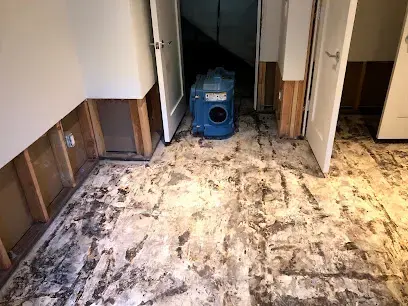
First steps for structural drying and dehumidification in Clayton
- 1
Extract first
Standing water is removed so drying equipment can work on moisture, not puddles.
- 2
Open what holds water
Baseboards, toe kicks and small wall sections are opened to let cavities breathe.
- 3
Leave equipment running
Do not switch off dehumidifiers or air movers, even when loud.
- 4
Keep the doors closed
Close doors to the wet area to keep the drying zone controlled.
How structural drying and dehumidification work is done in Clayton
Water that has been extracted is not the same as a house that is dry. Moisture stays in framing, subfloor, wall cavities and ceiling joists, and it only goes away through controlled drying. In Clayton, structural drying often follows winter storms and hillside runoff, as well as pipe and appliance leaks, and it is the stage where most of the work is measured and proven.
What does structural drying and dehumidification cost in Clayton, CA?
Class 1 to 2 losses sit in the first card, Class 3 losses with walls and ceilings sit in the second, and Class 4 losses with slab or hardwood and desiccants sit in the third.
Class 1 to 2
$1,200 to $3,500
- Air movers and LGR
- A few days of drying
- Daily readings
Class 3
$3,500 to $8,000
- Walls and ceilings
- Cavity drying
- More equipment
Class 4
$8,000 to $15,000
- Slab or hardwood
- Desiccants and mats
- Longer drying
Ranges are typical, not a quote: category of water, square footage, material class and how fast drying started move the number most. Run the water damage cost calculator for a closer range.
The structural drying and dehumidification process in four steps
The tech who does the walkthrough maps moisture before any equipment goes down, so the drying plan matches what is actually wet. Equipment stays until the readings say dry, not until it looks dry.
- 1
Map and classify
Meters set the class of loss.
- 2
Set the equipment
Dehumidifiers and air movers are placed by the map.
- 3
Read each day
Readings steer any changes.
- 4
Finish dry
Equipment leaves when the reference is met.
How drying is planned
The class of loss decides how much equipment goes in and how long it runs, based on how much of the structure absorbed water.
- Moisture is mapped with meters and infrared imaging
- A dry reference is set from unaffected material in the same house
- Low-grain refrigerant dehumidifiers pull water from the air
- Air movers push air across wet surfaces and into cavities
- Mats and desiccants handle hardwood, slab and tight spaces
Hardwood, subfloors and plaster are dense, so they hold moisture longer than carpet or drywall, and equipment is chosen for the material, not just the room.
Class 1 through 4
Class 1 and 2 losses involve a limited area or a carpeted room, and equipment runs for a few days. Class 3 means water came from above and soaked walls and ceilings, while Class 4 covers deep, low-porosity materials like hardwood or slab that dry slowly and need special equipment.
The class can change after the first readings, so the plan is adjusted as drying proceeds.
Winter storms and hillside runoff in Clayton can leave several rooms wet at once, which is why more than one class of loss can appear in the same house.
Readings, then closing up
Technicians return each day, take readings at the same points, and move equipment as zones reach the target. Nothing is closed up until framing, subfloor and drywall read at the reference, which protects the house from hidden moisture. For storm water, see storm flood cleanup, and for ceiling water see ceiling leak water damage.
- Daily readings logged by point
- Equipment moved as zones dry
- Final dry readings signed off
- Records handed to the homeowner
A wall that feels dry to the hand can still read wet inside, which is why drying stops on a number and never on touch.
Structural drying and dehumidification across Clayton and nearby towns
Structural drying covers ZIP code 94517 across Clayton, including Dana Hills, Dana Ridge, Clayton Wood, Cardinet Glen, Oakhurst and the Town Center along Main Street.
The same service nearby: structural drying and dehumidification in Danville, Walnut Creek, Alamo.
Related water damage services in Clayton
Structural Drying and Dehumidification questions in Clayton, CA
How long does structural drying take in Clayton?
It depends on the class of loss and the materials. Many jobs run several days, and Class 4 materials like hardwood and slab take longer.
Why are dehumidifiers and air movers both needed?
Air movers push air over wet surfaces, and dehumidifiers pull the released moisture out of the air so it does not settle elsewhere.
Is the equipment safe to run at home?
Yes. It is loud and warm but safe, and the crew sets cords and hoses so they stay out of walkways.
Can the house be used during drying?
Usually the dry rooms can, though the equipment fills part of the wet area. Sewage or gray water areas stay sealed off.
How do readings prove the house is dry?
Readings are compared to a dry reference from unaffected material, and the structure is dry only when wet areas match it.
Does drying prevent later damage?
Yes. Moisture left in framing can feed staining and decay, so drying to a reference lowers the risk of repeat problems.
Still dealing with it?
Water in framing and subfloor stays wet until it is dried on purpose.
Wet walls or floors in your Clayton house?
Share what happened and which rooms were wet, and the crew will plan the equipment and the readings.
(888) 774-9605Send drying details