Ceiling Leak Water Damage in Danville, CA
In two-story Danville homes, a failed hose or drain upstairs shows up as a stain or a drip downstairs. The water damage restoration experts trace the source, check the wiring and dry the ceiling cavity.
(888) 774-9605Ceiling dripping? Call now.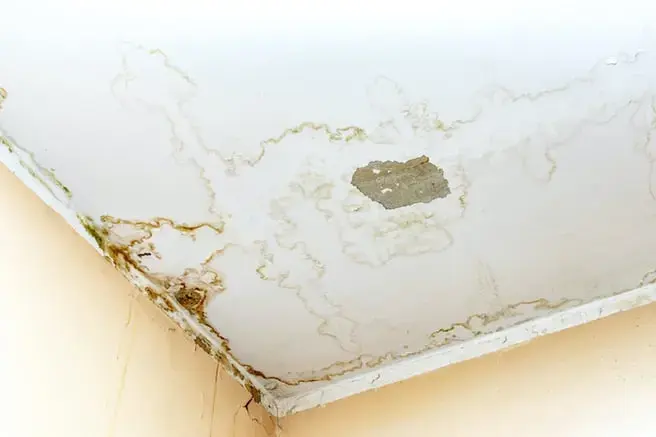
First steps for ceiling leak water damage in Danville
- 1
Shut off the fixture
Close the valve on the toilet, sink or washer upstairs, or the main.
- 2
Kill the light
Turn off the breaker to wet ceiling lights and fans if the panel is dry.
- 3
Stay out from under
Keep people out of the room if the ceiling sags.
- 4
Take photos
Record the stain and the fixture above before anything moves.
How ceiling leak water damage work is done in Danville
Many Danville homes are two-story, with bathrooms, laundry rooms and sometimes a second water heater upstairs, all sitting over living space. When a toilet supply hose, a shower pan, a tub drain or a washer hose fails, the water drops into the ceiling below and spreads across the drywall before it shows. This page covers leaks from inside the house; water from the roof is a different job.
What does ceiling leak water damage cost in Danville, CA?
In Danville, CA, ceiling leak water damage restoration typically runs $1,200 to $10,500, depending on the size of the wet area, whether the water was clean or gray and how much drywall and insulation come out.
Small stain
$1,200 to $3,000
- Ceiling dried in place
- Cavity drying
- Daily readings
Ceiling opened
$3,000 to $6,500
- Drywall section removed
- Wet insulation out
- Joists dried
Gray water or two rooms
$6,500 to $10,500
- Antimicrobial in cavity
- Walls below checked
- Extended drying
Ranges are typical, not a quote: category of water, square footage, material class and how fast drying started move the number most. Run the Danville water damage cost calculator for a closer range.
The ceiling leak water damage process in four steps
The tech who does the walkthrough maps moisture before any equipment goes down, so the drying plan matches what is actually wet. Equipment stays until the readings say dry, not until it looks dry.
- 1
Find the source
Fixtures above are checked and the leak is stopped.
- 2
Map the ceiling
Thermal imaging and meters outline the wet area.
- 3
Open where needed
Saturated drywall and wet insulation come out.
- 4
Dry the cavity
Air moved through the joist space until it reads dry.
Tracing an interior ceiling leak
The stain is rarely right under the source. Water runs along joists and pipes before it soaks through. The tech who does the walkthrough uses thermal imaging and meters on the ceiling, then checks the fixtures above: supply valves, wax rings, shower pans, tub overflows and the washer box.
- Toilet supply hoses and wax rings
- Shower pans and failed grout or caulk
- Tub drains and overflows
- Washer hoses and drain boxes in upstairs laundry rooms
Drywall, insulation and the electrical risk
Ceiling drywall loses strength when it soaks and can sag or fall. Light fixtures, recessed cans and ceiling fans sit right in the path of the water, so they stay off until checked. The drying team removes drywall that sags or reads saturated, pulls wet insulation from between the joists and dries the cavity with air movers aimed into the opening.
Where the ceiling can dry in place, small holes along the wet area let air move through the cavity without a full tear-out. Readings decide which approach fits.
Gray water from drains
A clean supply hose is Category 1. A leaking drain, a toilet overflow or washer discharge is Category 2, which means wet insulation comes out and the cavity gets an antimicrobial. See toilet overflow cleanup and appliance leak water damage for those sources.
- Category set before any removal
- Photos of the ceiling before it is opened
- Daily readings until joists and drywall are dry
The U.S. Consumer Product Safety Commission covers electrical and appliance safety at home, and the EPA WaterSense program explains how to find leaking toilets and fixtures.
A half-inch of water sitting on ceiling drywall adds real weight to a material that was never meant to hold it, which is why sagging ceilings are treated as a hazard.
Ceiling leak water damage across Danville and the San Ramon Valley
The Danville restoration crew covers ZIP 94526 and 94506, from Downtown Danville and Hartz Avenue out along Diablo Road, Sycamore Valley and Camino Tassajara to Greenbrook, Montair and Blackhawk.
Nearby coverage reaches Alamo, San Ramon, Walnut Creek, Lafayette, Moraga, Clayton.
Related water damage services in Danville
Ceiling Leak Water Damage questions in Danville, CA
How is a ceiling leak different from a roof leak?
A ceiling leak comes from plumbing or fixtures inside the house, usually an upstairs bath or laundry room. A roof leak comes from outside during rain.
Will the ceiling have to be replaced?
Not always. Drywall that dries in place stays. Sagging or saturated sections are removed and replaced after the cavity dries.
Is it safe to use the light under a leak?
No. Keep ceiling fixtures and fans off until they are checked, because water and wiring share the same cavity.
How long does a ceiling take to dry?
Usually two to four days once the source is fixed, longer if insulation soaked or the leak ran for days.
Why did the stain show up far from the bathroom?
Water runs along joists and pipes before it soaks through, so the stain can appear several feet from the source.
Is a ceiling leak covered by insurance?
A sudden leak is often covered, while a slow leak over time may not be. Check with your own insurer about your policy.
Still dealing with it?
Ceiling leak in your Danville home? Get it traced and dried.
Water dripping through the ceiling? Call now.
A wet ceiling cavity keeps spreading water across drywall and into the walls until the source is stopped and it is dried.
(888) 774-9605Danville ceiling leak response, any hour