Storm Roof Leak Water Damage in Danville, CA
Wind-driven rain in a long winter storm finds worn flashing, cracked tile and tired roof valleys. The drying team pulls wet insulation, dries the attic and opens the ceiling only where meters say.
(888) 774-9605Rain coming through the ceiling? Call now.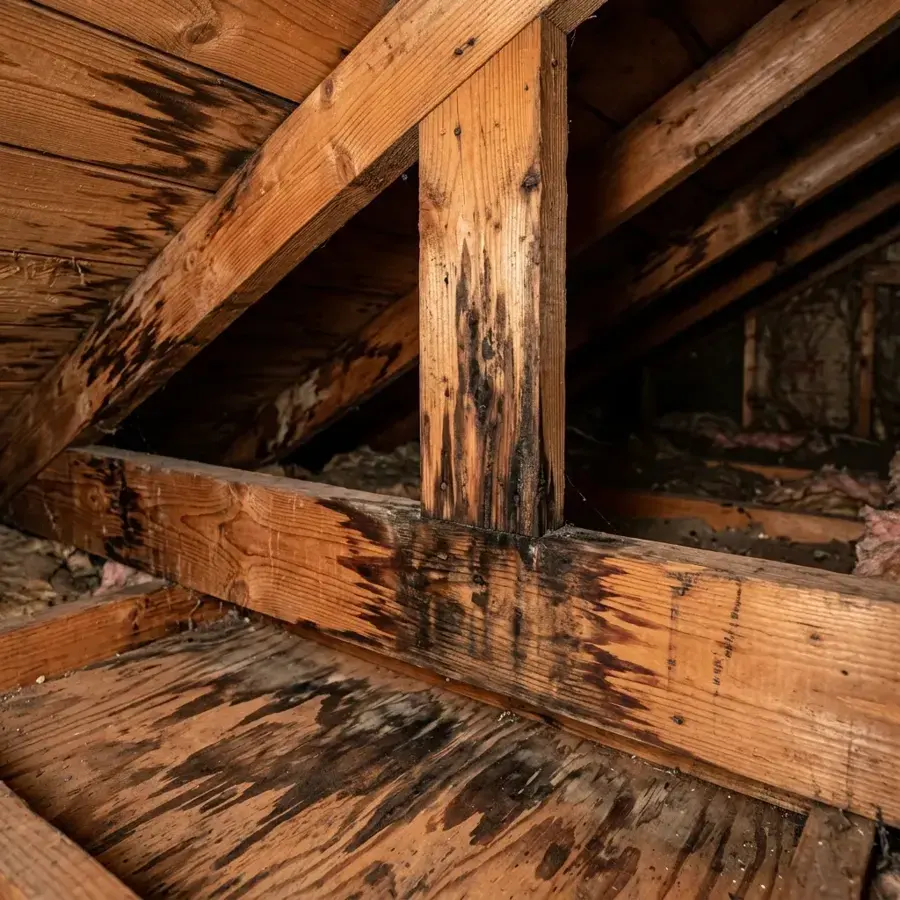
First steps for storm roof leak water damage in Danville
- 1
Catch the water
Set buckets under drips and move belongings out of the way.
- 2
Relieve a bulge
Poke a small hole in a sagging ceiling bubble over a bucket.
- 3
Keep lights off
Leave fixtures and fans in a wet ceiling switched off.
- 4
Photograph it
Record the stain, the drips and any visible roof damage.
How storm roof leak water damage work is done in Danville
Danville gets nearly all its rain between November and April, and much of it arrives in multi-day atmospheric river storms with strong south winds. Roofs that shed a light shower can let in water when rain blows sideways for hours. Concrete tile, wood shake and composition roofs on homes from the 1970s through the 1990s often have flashing, valleys and underlayment that are past their best.
What does storm roof leak water damage cost in Danville, CA?
In Danville, CA, storm roof leak water damage drying typically runs $1,500 to $14,000, not counting the roof repair, depending on how much attic insulation and ceiling got wet and how many rooms are affected.
One ceiling area
$1,500 to $4,000
- Attic metered
- Small insulation removal
- Ceiling dried in place
Several rooms
$4,000 to $8,500
- Ceiling drywall removed
- Attic decking dried
- Walls checked
Long storm exposure
$8,500 to $14,000
- Large insulation removal
- Multiple ceilings opened
- Extended drying
Ranges are typical, not a quote: category of water, square footage, material class and how fast drying started move the number most. Run the Danville water damage cost calculator for a closer range.
The storm roof leak water damage process in four steps
The tech who does the walkthrough maps moisture before any equipment goes down, so the drying plan matches what is actually wet. Equipment stays until the readings say dry, not until it looks dry.
- 1
Roof opening covered
A roofer tarps or repairs the leak.
- 2
Attic and ceiling mapped
Meters and thermal imaging trace the wet area.
- 3
Remove what holds water
Wet insulation and failed drywall come out.
- 4
Dry and verify
Equipment runs until decking, framing and drywall read dry.
How storm water gets in
Most roof leaks start where the roof changes direction or meets something. The water runs along the roof deck or rafters before it drips, so the ceiling stain is often well away from the opening.
- Flashing at chimneys, skylights and walls
- Roof valleys and worn underlayment under tile
- Blown-off or cracked tiles and shingles after high winds
- Gutters and downspouts that overflow back under the roof edge
Drying the attic, not just the ceiling
The tech who does the walkthrough checks the attic first: the roof deck, the rafters and the insulation above the wet ceiling. Wet blown-in or batt insulation holds water against the drywall and loses its value, so it comes out. Air movers and dehumidifiers dry the decking and framing, and the ceiling below is metered before any of it is cut.
Ceiling drywall that sags or reads wet past the drying goal comes down. Drywall that dries in place stays. Light fixtures and fans in wet ceilings stay off until they are checked.
Temporary cover and the claim file
A roofer tarps or repairs the opening so the next storm band does not undo the drying. The restoration team photographs the attic and ceiling before removal, logs daily readings and records the category and class, which helps an adjuster tell storm damage from long-term wear. See ceiling leak water damage when the source is inside the house instead.
- Attic photos before insulation removal
- Ceiling cuts made by the readings
- Daily logs until the decking and drywall are dry
The National Weather Service Bay Area office issues the storm and wind forecasts that matter here, and the California Department of Insurance explains how storm damage claims work in California.
Water entering at the roof can travel several feet along a rafter before it drips, so the opening is often far from the stain.
Storm roof leak water damage across Danville and the San Ramon Valley
The Danville restoration crew covers ZIP 94526 and 94506, from Downtown Danville and Hartz Avenue out along Diablo Road, Sycamore Valley and Camino Tassajara to Greenbrook, Montair and Blackhawk.
Nearby coverage reaches Alamo, San Ramon, Walnut Creek, Lafayette, Moraga, Clayton.
Related water damage services in Danville
Storm Roof Leak Water Damage questions in Danville, CA
Why do roofs leak in Danville storms?
Long atmospheric river storms bring hours of wind-driven rain that gets past worn flashing, valleys and older underlayment that handle normal rain fine.
Does the whole ceiling have to come down?
No. Meters decide. Sagging or saturated sections come out, and drywall that dries in place stays.
Why does wet insulation come out?
Soaked insulation holds water against the ceiling drywall, dries slowly and loses its value, so removing it speeds drying.
Who fixes the roof?
A roofer handles the tarp and the repair. The restoration team dries the attic and the rooms below.
How long does attic drying take?
Usually three to five days once the roof is covered, longer if the decking or framing soaked for days.
Is storm roof damage covered by insurance?
Sudden storm damage is often covered, while leaks from long-term wear may not be. Check with your own insurer about your policy.
Still dealing with it?
Storm leak in your Danville roof? Get the attic dried.
Rain coming into the house? Start the dry-out now.
Storm water in the attic keeps soaking insulation and ceilings until the roof is covered and the attic is dried.
(888) 774-9605Danville storm leak response, any hour