Structural Drying in Walnut Creek
Once the water is out, the real work is drying walls, framing, and floors to a measured target. Crews place equipment by water class and log readings until the numbers match.
(888) 774-9605Request structural drying in Walnut Creek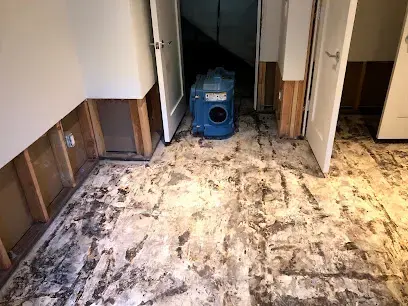
First steps for structural drying and dehumidification in Walnut Creek
- 1
Extract first
Bulk water has to leave before drying equipment can work.
- 2
Leave equipment running
Air movers and dehumidifiers should not be switched off or moved.
- 3
Keep doors closed
Closed rooms dry faster and keep humidity from spreading.
- 4
Photograph readings
Note the meters and equipment for the claim file.
How structural drying and dehumidification work is done in Walnut Creek
Structural drying is what turns a wet house back into a dry one. Water that is extracted from a floor still leaves moisture inside drywall, framing, and subfloor, and that moisture only leaves if the air around it is moved and dehumidified. Winter rain of about 26 inches a year is the main moisture season in the Walnut Creek area, and most drying jobs begin right after a leak, a storm, or a water extraction visit.
What does structural drying and dehumidification cost in Walnut Creek, CA?
Drying cost follows the water class and the amount of material that is wet. Light jobs sit in the first range, wet walls and ceilings move into the middle, and dense materials such as hardwood or slab reach the top.
Class 1 to 2
$1,200 to $3,500
- Air movers and LGR
- Standard equipment run
- Daily readings
Class 3
$3,500 to $8,000
- Walls and ceilings
- Cavity drying
- More equipment
Class 4
$8,000 to $15,000
- Slab or hardwood
- Desiccants and mats
- Longer drying
Ranges are typical, not a quote: category of water, square footage, material class and how fast drying started move the number most. Run the water damage cost calculator for a closer range.
The structural drying and dehumidification process in four steps
The tech who does the walkthrough maps moisture before any equipment goes down, so the drying plan matches what is actually wet. Equipment stays until the readings say dry, not until it looks dry.
- 1
Survey
Meters and a camera map every wet material.
- 2
Set equipment
Air movers and dehumidifiers are placed by class.
- 3
Monitor
Readings are logged and equipment is moved.
- 4
Sign off
Final numbers match the dry reference.
Water classes and what they mean
The drying plan depends on how much of the structure is wet and how fast it will release that water, as in a burst pipe job that crossed two floors.
- Class one: little water and low-porosity surfaces
- Class two: a whole room, with wet carpet and walls to a short height
- Class three: water from above, soaking ceilings and walls
- Class four: dense materials such as hardwood, slab, and plaster
- Water categories, from clean to contaminated, set what can stay
How drying works
Air movers push dry air across wet surfaces, and low-grain refrigerant dehumidifiers pull the released moisture out of the air. In dense materials, desiccant units and drying mats help, because refrigerant machines slow down when humidity is already low.
Equipment is placed according to the water class and square footage, then adjusted as readings show which areas are drying slowly. Wall cavities are opened with small ports or removed baseboards when readings show moisture trapped behind intact drywall.
Readings decide the finish
Moisture meters read drywall, wood, and concrete, and a hygrometer tracks the air. Each visit adds new numbers to the log, and equipment is moved toward the wettest spots. Drying is finished only when the readings match the dry reference taken from unaffected parts of the home, not when a surface feels dry. A thermal camera helps spot damp patches, but meter readings still decide. Hardwood floors and cabinets get special attention, since they release water slowly and can cup if dried too fast.
- Meter readings on every wet material
- Air temperature and humidity at each visit
- Equipment count and placement recorded
- Final sign-off sheet for the insurer
No honest drying estimate exists before the survey, because the time depends on the materials, the water class, and how long the structure stayed wet.
Structural drying and dehumidification across Walnut Creek and nearby towns
Drying equipment goes out across ZIP codes 94595 through 94598, covering Rossmoor, Parkmead, Tice Valley, Saranap, Northgate, Walnut Heights, and the commercial areas near Shadelands Business Park.
The same service nearby: structural drying and dehumidification in Danville, Alamo, Lafayette.
Water damage restoration in Walnut Creek · every town covered
Related water damage services in Walnut Creek
Structural Drying and Dehumidification questions in Walnut Creek, CA
What does IICRC S500 require?
It is the industry procedure for water damage restoration, covering water categories, drying classes, and monitoring. It works best when readings, not guesses, decide the finish.
Why do dehumidifiers run along with air movers?
Air movers release moisture from materials, and dehumidifiers remove it from the air. Without both, the moisture just resettles.
Can I turn equipment off at night?
No. Drying relies on continuous airflow, and switching machines off lets materials reabsorb moisture.
How long will drying take?
It depends on the materials and how wet they were, so no number is honest before the survey. Daily readings show progress.
Why open walls to dry them?
Closed wall cavities hold moisture and dry slowly. Openings, small ports, or removed baseboards let air reach the wet framing.
What are the final readings compared to?
A dry reference taken from unaffected materials in the same home, so the target fits the house.
Still dealing with it?
Water out but walls still wet in Walnut Creek? The crew can outline a drying plan with readings.
Dry the structure to a measured target
The crew sets equipment by water class, logs readings every visit, and finishes when walls, framing, and floors match.
(888) 774-9605Plan structural drying