Structural Drying and Dehumidification in Alamo, CA
After water comes out, framing, subfloor and wall cavities still hold moisture. Alamo crews set air movers and low-grain dehumidifiers and take readings until the structure matches dry reference material.
(888) 774-9605Walls still wet after cleanup? Call now for drying.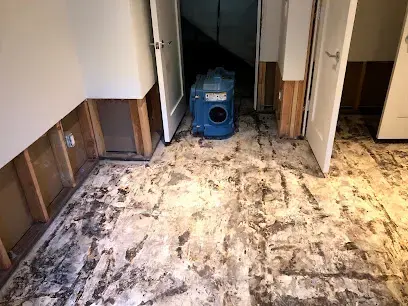
First steps for structural drying and dehumidification in Alamo
- 1
Keep the area closed
Close windows and doors in the wet zone so humid air does not return.
- 2
Leave equipment on
Do not switch off air movers or dehumidifiers before readings say the job is done.
- 3
Move belongings
Take valuables and fabrics out of the drying zone.
- 4
Read the log
Check the daily readings with the technician at each visit.
How structural drying and dehumidification work is done in Alamo
Drying is where a water loss is actually finished. Extraction removes the standing water, but wood, drywall and subfloor keep moisture for days, and a house that feels dry can still be damp inside the walls. Structural drying is the process of moving that moisture out with controlled airflow and dehumidification until readings are back to normal for the home.
What does structural drying and dehumidification cost in Alamo, CA?
Structural drying in Alamo starts at $1,200 to $3,500 for Class 1 to 2 losses and reaches $15,000 for Class 4 jobs involving slab or hardwood. Equipment count and drying days set the final price.
Class 1 to 2
$1,200 to $3,500
- Air movers and LGR
- Three to four days
- Daily readings
Class 3
$3,500 to $8,000
- Walls and ceilings
- Cavity drying
- More equipment
Class 4
$8,000 to $15,000
- Slab or hardwood
- Desiccants and mats
- Longer drying
Ranges are typical, not a quote: category of water, square footage, material class and how fast drying started move the number most. Run the water damage cost calculator for a closer range.
The structural drying and dehumidification process in four steps
The tech who does the walkthrough maps moisture before any equipment goes down, so the drying plan matches what is actually wet. Equipment stays until the readings say dry, not until it looks dry.
- 1
Set the baseline
Dry reference readings come from unaffected material.
- 2
Place equipment
Air movers and dehumidifiers go in by zone.
- 3
Read daily
Meters check the same points each visit.
- 4
Remove at goal
Equipment comes out once readings match.
How the equipment works together
Air movers push dry air across wet surfaces and pull moisture off them. Low-grain refrigerant dehumidifiers capture that moisture from the air so it does not settle somewhere else. Neither is enough alone, which is why the two are placed together and adjusted over the following days.
- Air movers set low along walls and across floors
- Dehumidifiers sized to the volume of the drying space
- Drying mats under hardwood to pull moisture from boards
- Injection ports into wall cavities where drywall is kept
- Doors and vents closed to keep the drying area sealed
Readings, not guesses
Technicians take baseline readings from unaffected material in the same home, which becomes the dry reference. Each day, meters are used on the same points, and the log shows moisture falling. Equipment is moved or removed as areas reach the goal, and the job ends only when readings match.
The standard behind this is IICRC S500, which classes water losses by how much material is wet and how fast it will dry. Higher classes call for desiccant drying or more equipment.
Large homes dry in zones
Alamo has many ranch-style houses on relatively large lots, so a wet floor plan may be long and open. The crew splits the wet area into zones and balances airflow so one end does not dry while the other stays wet. After a burst pipe or an extraction job, the dry-out follows the same room-by-room plan, with the Alamo house documented from the first visit.
Hardwood, slab and special cases
Dense materials dry slowly. Hardwood boards, concrete slabs and plaster hold water deeply, so drying mats, desiccant dehumidifiers or injected airflow replace simple fans. The crew may also pull a few boards or drill small holes to let trapped air escape, and these are plugged and repaired afterward.
- Hardwood watched for cupping and crowning during the dry-out
- Concrete read with a surface meter and a humidity probe
- Insulation in sealed cavities removed when it will not dry
Warm air holds more moisture, so keeping the space warm and sealed helps drying, which is why windows stay shut during the process.
Structural drying and dehumidification across Alamo and nearby towns
Structural drying runs across ZIP 94507, covering Round Hill Country Club, Stonegate, Bryan Ranch, White Gate, Westside Alamo and Castle Hill, as well as homes near Danville Boulevard and Stone Valley Road.
The same service nearby: structural drying and dehumidification in Danville, Walnut Creek, Moraga.
Related water damage services in Alamo
Structural Drying and Dehumidification questions in Alamo, CA
How long does structural drying take?
Most jobs need three to five days, though dense materials such as hardwood or slab can take longer. The final day is set by the readings, not by the calendar.
Why is the equipment so loud?
Air movers and dehumidifiers run all day to pull moisture out, and the noise stops when drying ends. Louder equipment usually means stronger airflow.
Can I open the windows to help?
No. Humid outdoor air slows the process, so the area is kept closed.
How do I know it is dry?
Daily meter readings are compared with the dry reference, and the log is shared at the end. Moisture is read at the same points each visit.
Will it raise my electric bill?
Equipment draws power for several days. Your insurer may reimburse the cost as part of the claim.
Does drying prevent mold?
Drying within a few days lowers the chance of mold growth, which is why speed matters. Drying also protects paint and flooring from damage.
Still dealing with it?
Wet walls or floors in your Alamo home? Get them dried to readings.
Moisture still in the structure? Start the drying now.
Wood and drywall hold water long after the surface feels dry, so drying equipment protects the repair.
(888) 774-9605Alamo drying response, any hour