Structural Drying and Dehumidification in Lafayette, CA
After the water is out, the structure still holds moisture in framing, subfloor and drywall. The crew measures it, sets air movers and dehumidifiers to the room and keeps logging readings until everything is dry.
(888) 774-9605Request structural drying in Lafayette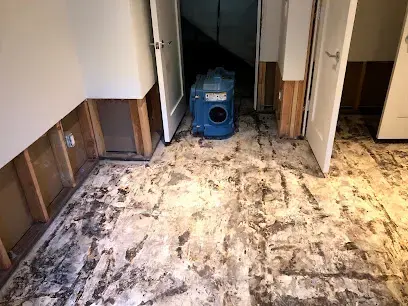
First steps for structural drying and dehumidification in Lafayette
- 1
Keep the house closed
Close exterior doors and windows so humid air stays out.
- 2
Lift what is wet
Raise rugs and furniture legs off damp floors.
- 3
Skip household fans
Window fans and hair dryers can spread moisture around.
- 4
Photograph the damage
Record damp areas and note what failed and when.
How structural drying and dehumidification work is done in Lafayette
Drying is a measured process, not a waiting game. After extraction and any tear-out, moisture sits in framing, subfloor, drywall and trim, and it only leaves if air movement and dehumidification are balanced to the size and condition of the space. Lafayette's wet winters mean materials can stay damp for a long time if drying is delayed, so each room gets a plan built from its own readings.
What does structural drying and dehumidification cost in Lafayette, CA?
Class 1 to 2 drying runs $1,200 to $3,500, Class 3 runs $3,500 to $8,000, and Class 4 jobs with slab or hardwood run $8,000 to $15,000. Equipment count, room volume and drying days set the band.
Class 1 to 2
$1,200 to $3,500
- Air movers and LGR
- Three to four days
- Daily readings
Class 3
$3,500 to $8,000
- Walls and ceilings
- Cavity drying
- More equipment
Class 4
$8,000 to $15,000
- Slab or hardwood
- Desiccants and mats
- Longer drying
Ranges are typical, not a quote: category of water, square footage, material class and how fast drying started move the number most. Run the water damage cost calculator for a closer range.
The structural drying and dehumidification process in four steps
The tech who does the walkthrough maps moisture before any equipment goes down, so the drying plan matches what is actually wet. Equipment stays until the readings say dry, not until it looks dry.
- 1
Map the moisture
Meters chart the wet areas.
- 2
Set the equipment
Air movers and dehumidifiers are sized to the room.
- 3
Read each day
Readings are logged and equipment adjusted.
- 4
Verify and release
Dry targets are met before equipment leaves.
How drying is classified
The IICRC S500 standard sorts losses by how much water was absorbed, which sets how much equipment the room gets. Losses from a burst pipe often begin as clean-water jobs, while sewage always begins as Category 3.
- Class 1 to 2: small wet areas, with limited wicking into walls
- Class 3: water from above that soaks ceilings, walls and carpet
- Class 4: dense materials such as slab or hardwood that hold water deeply
- Category 1 to 3: clean, gray or black water, which decides what must be removed
- Each class sets equipment counts and expected drying days
Equipment and readings
Air movers push dry air across wet surfaces, while low-grain refrigerant dehumidifiers pull the moisture out of the air so it does not settle back. Desiccant units and drying mats handle slab and hardwood. Equipment is counted by room volume and wet surface area, not guessed.
Every day a technician reads moisture in the same locations and records temperature and humidity. Wall cavities are checked or drilled where readings stay high. Equipment is moved or removed as rooms reach their targets, and the log becomes part of the claim file. Extraction before drying is covered under water extraction.
When drying is finished
Drying ends when readings match a dry reference taken from an unaffected part of the same house, not when a surface feels dry. Quitting early lets hidden dampness come back, so the last round of readings is never skipped. Class 3 and Class 4 jobs commonly take longer than Class 1 and 2, and the log shows why. After that, equipment comes out and the log is handed over for the adjuster.
- Readings match the dry reference points
- Cavities and subfloor read dry, not just surfaces
- Equipment removed room by room
- Final log and photos go to the adjuster
Trade note: a dehumidifier running in a room with the door open and the vents blowing is fighting the whole house, so rooms are closed off for drying.
Structural drying and dehumidification across Lafayette and nearby towns
Structural drying covers ZIP 94549, including Downtown Lafayette, Burton Valley, Springhill, Silver Dell, Tanglewood, Happy Valley and Reliez Valley, on homes and shops of any size.
The same service nearby: structural drying and dehumidification in Danville, Moraga, Walnut Creek.
Related water damage services in Lafayette
Structural Drying and Dehumidification questions in Lafayette, CA
How long does structural drying take?
Clean-water losses commonly dry in three to four days, while higher classes, hardwood and slab take longer, and the daily readings show when it is done.
Why is the equipment so loud?
Air movers and dehumidifiers run all day to move moisture out of the structure, and the noise ends when readings reach target.
Can the equipment be turned off at night?
No, because stopping lets moisture settle back into materials and extends the job, so equipment runs until the crew removes it.
How much electricity does drying use?
Several machines draw real power, but the cost is small next to the repair cost of materials that stay wet.
What if a wall stays wet?
The crew opens or drills the cavity so air can reach the framing, and removes drywall or insulation that cannot dry.
What proves the drying is complete?
Readings that match dry reference points in the same house, recorded on the final log, which goes to the adjuster.
Still dealing with it?
Water out but walls still damp? Describe the loss and the crew explains the drying plan.
Damp framing in a Lafayette home needs measured drying
Send photos and the source of the water, and the crew outlines the equipment and readings.
(888) 774-9605Request drying help