Storm Roof Leak Water Damage in Walnut Creek
When winter rain finds a worn roof, the water soaks attic insulation first and stains the ceiling later. Crews meter the attic and rooms below, then dry what the storm reached.
(888) 774-9605Request roof leak cleanup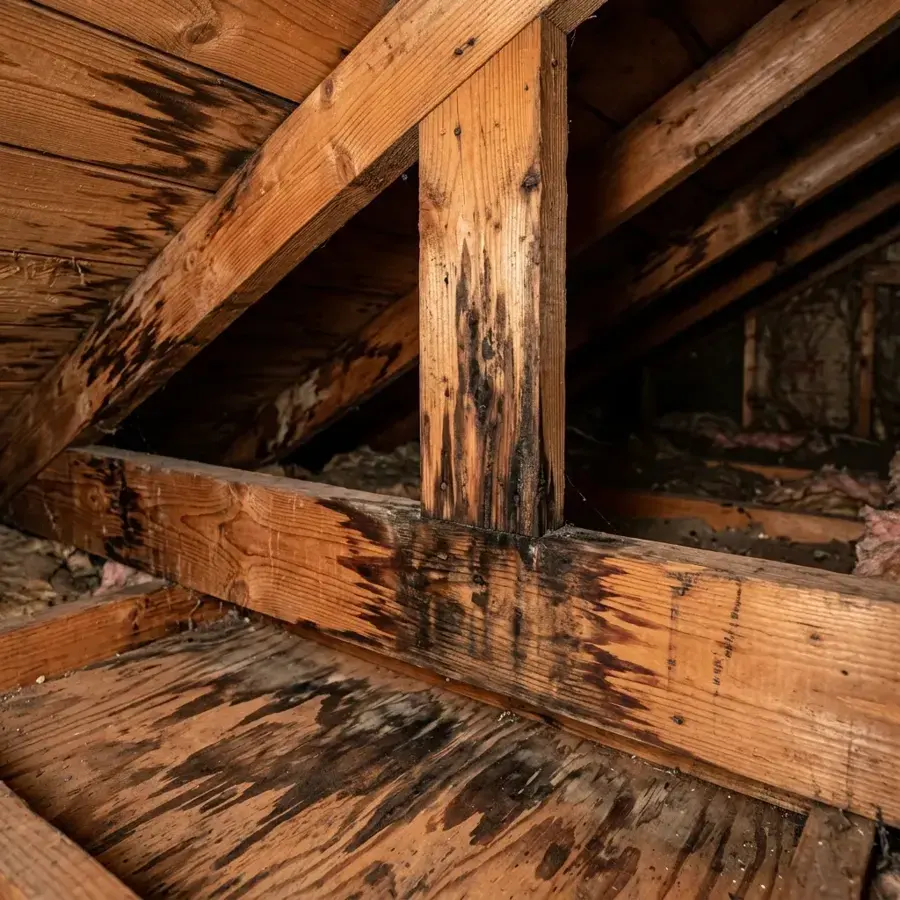
First steps for storm roof leak water damage in Walnut Creek
- 1
Catch the drips
Set buckets and move furniture away from the stain.
- 2
Protect belongings
Cover items you cannot move with plastic sheeting.
- 3
Call a roofer
The opening has to be tarped or repaired before drying works.
- 4
Photograph the ceiling
Record stains, drips, and the attic if it is safe to see.
How storm roof leak water damage work is done in Walnut Creek
Walnut Creek averages about 26 inches of rain a year, nearly all of it in winter, so a roof that held up through the dry months can start leaking when storms return. An atmospheric river in October 2021 brought heavy rain and strong winds across the Bay Area, the kind of weather that drives water under shingles and past flashing. A roofer fixes the opening, and the restoration crew handles the water already inside, including any ceiling leak damage below.
What does storm roof leak water damage cost in Walnut Creek, CA?
A single stained ceiling dries for much less than a leak that soaked attic insulation across several rooms. Cost depends on how long the roof leaked and how much drywall must be opened.
One ceiling area
$1,500 to $4,000
- Attic metered
- Small insulation removal
- Ceiling dried in place
Several rooms
$4,000 to $8,500
- Ceiling drywall removed
- Attic decking dried
- Walls checked
Long storm exposure
$8,500 to $14,000
- Large insulation removal
- Multiple ceilings opened
- Extended drying
Ranges are typical, not a quote: category of water, square footage, material class and how fast drying started move the number most. Run the water damage cost calculator for a closer range.
The storm roof leak water damage process in four steps
The tech who does the walkthrough maps moisture before any equipment goes down, so the drying plan matches what is actually wet. Equipment stays until the readings say dry, not until it looks dry.
- 1
Meter the attic
Insulation, decking, and rafters are read for moisture.
- 2
Remove what is soaked
Wet insulation and sagging drywall come out in sections.
- 3
Dry the structure
Air movers and dehumidifiers run until readings settle.
- 4
Record for the claim
Photos and logs show how far the storm water reached.
How storm water travels
Rain that gets through the roof covering lands on sheathing, rolls into insulation, and drips onto the ceiling drywall.
- Wet sheathing and rafters in the attic
- Insulation that clumps and holds water
- Ceiling drywall that stains, sags, or bubbles
- Light fixtures and fans that collect dripping water
- Walls below, where water follows framing downward
What the crew checks
Meters read the ceiling, the attic framing, and the tops of walls, and a thermal camera shows wet patches that paint hides. Readings in the attic matter because insulation can stay wet long after the ceiling looks dry, and it keeps feeding moisture back into the drywall.
The crew also notes where the roof was open, so the roofer's repair and the drying plan match and the leak does not restart.
Drying or opening the ceiling
A small stain on firm drywall often dries in place with air movers and a dehumidifier. A sagging or soft ceiling is opened, because wet drywall holds water above the room and gets worse. Wet attic insulation is removed in sections so the framing can breathe. Once the roof is sealed, structural drying equipment finishes the job. Wet insulation can mat down, lose its value, and keep water against the drywall, so it is replaced after the attic is dry.
- Firm ceilings dried in place with air movers
- Sagging drywall cut out and discarded
- Insulation replaced after the attic dries
- Walls checked for water that ran downward
Tarping or repairing the roof opening comes first, since drying a ceiling while rain still enters the attic only restarts the problem.
Storm roof leak water damage across Walnut Creek and nearby towns
Storm roof leak calls come from ZIP codes 94595 through 94598, including Walnut Heights, Rancho Paraiso, Summit Ridge, Carriage Square, and the Lakewood Area.
The same service nearby: storm roof leak water damage in Danville, Alamo, Lafayette.
Water damage restoration in Walnut Creek · every town covered
Related water damage services in Walnut Creek
Storm Roof Leak Water Damage questions in Walnut Creek, CA
Is a roof leak covered after a storm?
Coverage depends on the policy and the cause, so confirm with your own insurer. The crew records the interior damage in detail.
Do I need to open the ceiling?
Only if it sags, feels soft, or stays wet. Firm drywall with a small stain often dries in place.
Why check the attic if the ceiling looks fine?
Insulation can stay wet for a long time and keep releasing moisture downward, so the attic gets readings too.
Can wind-driven rain cause leaks without a visible hole?
Yes. Strong winds push rain under shingles and around flashing, so water can enter even when nothing looks damaged from the ground.
Who repairs the roof?
A roofer handles the roof covering. Restoration covers extraction, insulation removal, and drying inside the house.
How soon should drying start?
As soon as the roof opening is covered, since wet insulation and drywall keep absorbing moisture and stains spread.
Still dealing with it?
Ceiling stained after a storm in Walnut Creek? Share the details and the crew will outline attic and ceiling drying.
Storm water inside, roofer on the way?
Once the roof is covered, the crew meters the attic and ceilings, removes wet insulation, and dries the rooms below with readings recorded.
(888) 774-9605Plan ceiling drying