Ceiling Leak Water Damage in Walnut Creek
A brown stain or a bulge in the ceiling usually means water is pooling above it. Crews find where it came from, open the cavity if needed, and dry the joists and rooms below.
(888) 774-9605Walnut Creek ceiling leak help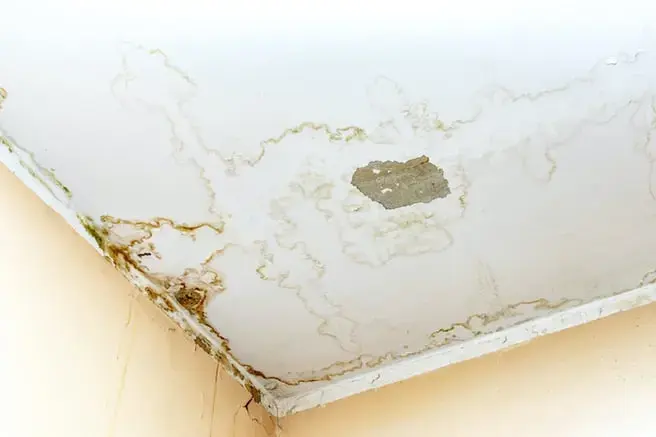
First steps for ceiling leak water damage in Walnut Creek
- 1
Stop the water above
Close the fixture valve or main so the leak stops feeding the ceiling.
- 2
Turn off power
Switch off the circuit if water is near lights or fans.
- 3
Place a bucket
Catch the drips and avoid poking a bulge that holds water.
- 4
Photograph the stain
Record the ceiling and the room above before cleanup.
How ceiling leak water damage work is done in Walnut Creek
Ceiling water almost always comes from somewhere above: a tub or shower, a toilet, a washing machine, a burst pipe, or the roof. In multi-story buildings and communities such as Rossmoor, one upstairs leak can reach the ceiling of the room or unit below, and the damage often shows up well after the water stopped. The crew works from the visible stain to the cavity above, then plans the structural drying that follows.
What does ceiling leak water damage cost in Walnut Creek, CA?
A small stain that dries in place sits at the low end, while a ceiling that must be opened costs more. Two rooms, gray water, or a long-running leak move the job toward the top range.
Small stain
$1,200 to $3,000
- Ceiling dried in place
- Cavity drying
- Daily readings
Ceiling opened
$3,000 to $6,500
- Drywall section removed
- Wet insulation out
- Joists dried
Gray water or two rooms
$6,500 to $10,500
- Antimicrobial in cavity
- Walls below checked
- Extended drying
Ranges are typical, not a quote: category of water, square footage, material class and how fast drying started move the number most. Run the water damage cost calculator for a closer range.
The ceiling leak water damage process in four steps
The tech who does the walkthrough maps moisture before any equipment goes down, so the drying plan matches what is actually wet. Equipment stays until the readings say dry, not until it looks dry.
- 1
Trace the source
The crew finds where the water entered and confirms the leak is stopped.
- 2
Open and extract
Wet drywall comes out and standing water is removed.
- 3
Dry the cavity
Equipment runs while joist readings are logged.
- 4
Confirm and hand over
Final readings go to the homeowner for the claim.
Reading the stain
A ceiling stain shows where water exited, not always where it entered, so the first job is tracing it upward.
- Brown rings suggest water that has soaked through more than once
- A bulge means drywall is holding water above it
- Peeling paint points to moisture behind the surface
- Dripping from a light fixture needs the power off at once
- Fresh stains near walls may follow framing from farther away
Opening a ceiling that holds water
A bulging ceiling can release a rush of water when it is punctured, so it is relieved in a controlled way with a bucket underneath. Wet drywall is then cut back to dry, firm edges, and the insulation above is checked and pulled if it is soaked.
The joists and the top of nearby walls get readings too, since water follows wood and can end up several feet from the first stain.
Drying what stays
After the opening, air movers and a dehumidifier dry the cavity from below while meters track the joists and the subfloor of the room above. If the leak came from a bathroom, the floor above is checked so tile and subfloor are not left wet beneath the surface.
- Joists metered until they match dry readings
- Subfloor above checked for trapped moisture
- Walls below tested at the top plate
- Insulation replaced once everything is dry
A ceiling that looks dry on the surface can still hold water in the cavity above it, so readings decide when drying is finished.
Ceiling leak water damage across Walnut Creek and nearby towns
Ceiling leak calls cover ZIP codes 94595 to 94598, including Rossmoor, Parkmead, Northgate, Saranap, Walnut Heights, and the multi-story buildings around downtown and Creekside throughout the city.
The same service nearby: ceiling leak water damage in Danville, Alamo, Lafayette.
Water damage restoration in Walnut Creek · every town covered
Related water damage services in Walnut Creek
Ceiling Leak Water Damage questions in Walnut Creek, CA
Can a stained ceiling just be painted over?
Not until it is dry. Painting over a wet ceiling traps moisture and the stain returns, so readings should be taken first.
Why does the ceiling sag?
Wet drywall loses strength and holds water, which pulls the board down. Sagging ceilings usually need to be opened and replaced.
Is ceiling water from a toilet or tub gray water?
Water from a supply pipe is clean, but water that has passed through a toilet or drain is treated as contaminated. The crew confirms the source before choosing what to remove.
What if the leak came from a neighbor's unit above?
The restoration steps are the same, though the cause is documented carefully because an association or another insurer may be involved.
How do crews know the cavity is dry?
Meters read joists, subfloor, and the top of the walls, and the numbers are compared with a dry reference before equipment comes out.
Can the room be used during drying?
Often, though the opened ceiling area may be sealed off. Equipment noise and airflow are part of the process for the drying period.
Still dealing with it?
Stain growing on a ceiling in Walnut Creek? Share the details and the crew will outline the cavity drying plan.
Trace the leak and dry the ceiling
The crew finds the source above, opens wet drywall where needed, and dries joists and walls below until readings match the dry reference.
(888) 774-9605Plan ceiling repair