Storm Roof Leak Water Damage in Lafayette, CA
Winter rain that finds its way through roofing wets attic insulation, decking and ceilings before a stain shows. The crew traces the water, removes what is soaked and dries the structure.
(888) 774-9605Request storm roof leak drying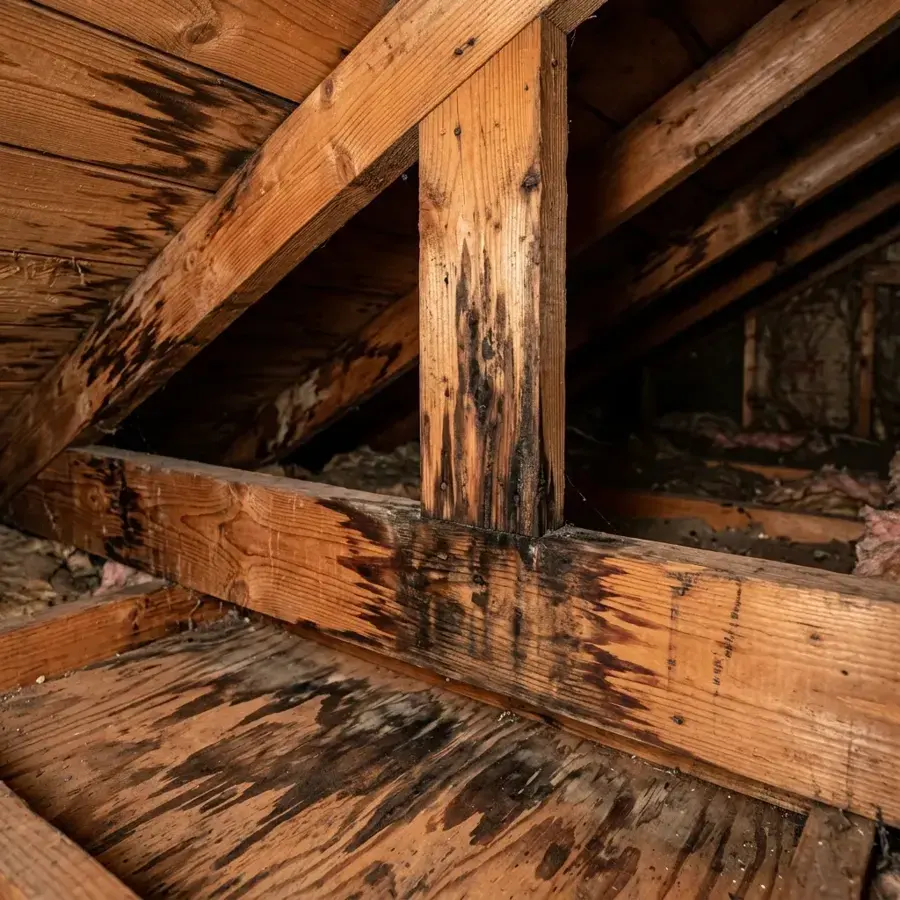
First steps for storm roof leak water damage in Lafayette
- 1
Contain the drip
Place a bucket and lift furniture and rugs from under the stain.
- 2
Check for sagging
Stay clear of bulging drywall, which can fall and holds water.
- 3
Turn off lights
Switch off fixtures and fans on the wet ceiling at the breaker.
- 4
Photograph the damage
Record the stain, the attic if safe to reach and the date of the storm.
How storm roof leak water damage work is done in Lafayette
A roof leak shows up last. By the time a ceiling stain appears, rain has usually already soaked insulation and the underside of the decking above it. The December 2022 to January 2023 atmospheric river storms, and the trees that came down in Lafayette on December 31, 2022, are a reminder that winter roof leaks follow heavy rain, and that the damage hides in the attic first.
What does storm roof leak water damage cost in Lafayette, CA?
One ceiling area runs $1,500 to $4,000 after a storm leak, several rooms $4,000 to $8,500, and a long exposure with multiple ceilings opened $8,500 to $14,000. Insulation volume and the number of openings drive the total.
One ceiling area
$1,500 to $4,000
- Attic metered
- Small insulation removal
- Ceiling dried in place
Several rooms
$4,000 to $8,500
- Ceiling drywall removed
- Attic decking dried
- Walls checked
Long storm exposure
$8,500 to $14,000
- Large insulation removal
- Multiple ceilings opened
- Extended drying
Ranges are typical, not a quote: category of water, square footage, material class and how fast drying started move the number most. Run the water damage cost calculator for a closer range.
The storm roof leak water damage process in four steps
The tech who does the walkthrough maps moisture before any equipment goes down, so the drying plan matches what is actually wet. Equipment stays until the readings say dry, not until it looks dry.
- 1
Meter both sides
Readings are taken in the room and the attic.
- 2
Remove the wet
Soaked insulation comes out and the ceiling is opened if needed.
- 3
Dry the cavity
Fans and dehumidifiers run on the attic and ceiling space.
- 4
Verify dry
Final readings confirm decking and drywall have dried.
Where roof water goes
Water enters at a flashing, vent or worn section, then travels along the rafters before it drips onto the ceiling below. Roofing that is worn, lifted or cracked, and flashing around vents and chimneys, are common entry points.
- Insulation soaks and drops, leaving the ceiling drywall wet
- Attic decking and rafters stay damp long after the rain ends
- Wet ceilings sag, stain or crack at the seams
- Water follows wiring and light fixtures downward
- Wall tops absorb water where the ceiling meets the wall
What the crew does
The crew meters the ceiling from below and the attic from above, since a dry-looking stain can sit over soaked insulation. Moisture readings are logged in the attic as well as in the room below. Wet insulation is removed, the ceiling is opened where it holds moisture, and fans and dehumidifiers dry the cavity.
Roof repair belongs to a roofer and should happen first or alongside drying, because a leak still open will keep rewetting the work. Related ceiling damage is covered under ceiling leak water damage.
Storm timing and the claim
After a storm, many roofs leak at once, and photos taken on the day of the rain help later. Dated pictures of the stain, the attic and the roof opening support the claim, and drying records show the structure was returned to dry. Policies differ on storm leaks, so the homeowner's own insurer makes the call.
- Photos of the stain, attic and any opening
- A tarp or temporary patch, with receipts
- Moisture readings before and after drying
- A written scope for removed materials
Trade note: a ceiling that stops dripping is not a dry ceiling, so readings in the cavity decide whether drywall can stay. See structural drying.
Storm roof leak water damage across Lafayette and nearby towns
Roof leak calls cover ZIP 94549, including Reliez Valley, Happy Valley, Springhill, Burton Valley, Silver Dell, Tanglewood and Downtown Lafayette, plus shops along Mt. Diablo Boulevard.
The same service nearby: storm roof leak water damage in Danville, Moraga, Walnut Creek.
Related water damage services in Lafayette
Storm Roof Leak Water Damage questions in Lafayette, CA
Who fixes the roof itself?
A roofer repairs the opening, while the restoration crew handles insulation, drywall and drying, and the two jobs are coordinated so the leak is stopped first.
Can a wet ceiling be dried in place?
Sometimes, if the drywall is intact and the cavity can be dried with ports or small openings, but sagging or stained drywall usually comes out.
What happens to wet attic insulation?
Soaked insulation loses its value and holds water against the ceiling, so it is removed, and the decking above is dried.
How soon should a roof leak be dried?
As soon as the rain allows, because insulation and drywall keep absorbing water, and a damp attic can support microbial growth if left.
Does homeowners coverage include storm leaks?
Policies differ on storm leaks and long-term seepage, so the homeowner's own insurer decides, and dated photos help that decision.
Will the leak come back?
Only if the roof is not repaired, so the roof opening should be fixed before or alongside drying.
Still dealing with it?
A leaking roof in Lafayette needs a plan before the next rain.
Wet attic or ceiling after a storm?
Send photos of the stain and the attic if it is safe to reach, and the crew outlines drying and removal.
(888) 774-9605Request roof leak help