Ceiling Leak Water Damage in Lafayette, CA
A stained or sagging ceiling means water is trapped above it. The crew finds the source, whether a roof, an upstairs bathroom or a pipe, then opens and dries the cavity before the damage spreads.
(888) 774-9605Request ceiling leak drying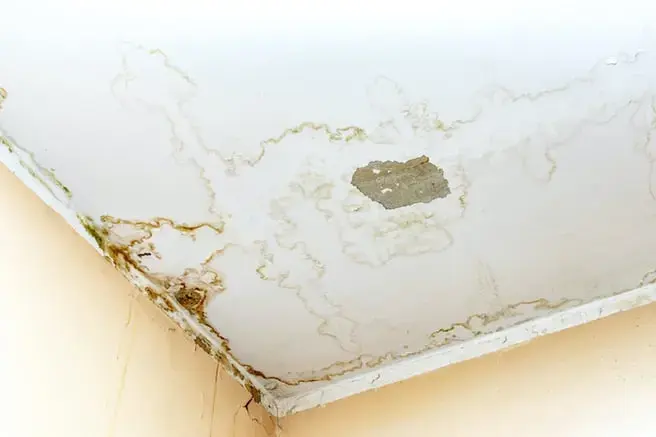
First steps for ceiling leak water damage in Lafayette
- 1
Stop the water above
Shut the supply or fixture valve if a pipe or fixture is the likely source.
- 2
Keep people clear
Place a bucket below and stay out from under any bulging section.
- 3
Switch off the circuit
Turn off light and fan power for the wet ceiling at the breaker.
- 4
Photograph the stain
Record the stain, any sagging and the room above if it is wet.
How ceiling leak water damage work is done in Lafayette
A ceiling stain is the end of a path, not the start of one. Water may travel along a joist or a pipe a good way before it drips, so the wet spot below rarely sits under the actual leak. Before drying begins, the source has to be identified and stopped, because a ceiling dried while the leak continues will simply get wet again.
What does ceiling leak water damage cost in Lafayette, CA?
A small ceiling stain dried in place runs $1,200 to $3,000, an opened ceiling $3,000 to $6,500, and gray water or two rooms $6,500 to $10,500. The number of openings and the water category set the price.
Small stain
$1,200 to $3,000
- Ceiling dried in place
- Cavity drying
- Daily readings
Ceiling opened
$3,000 to $6,500
- Drywall section removed
- Wet insulation out
- Joists dried
Gray water or two rooms
$6,500 to $10,500
- Antimicrobial in cavity
- Walls below checked
- Extended drying
Ranges are typical, not a quote: category of water, square footage, material class and how fast drying started move the number most. Run the water damage cost calculator for a closer range.
The ceiling leak water damage process in four steps
The tech who does the walkthrough maps moisture before any equipment goes down, so the drying plan matches what is actually wet. Equipment stays until the readings say dry, not until it looks dry.
- 1
Trace the source
The path above the ceiling is followed and the leak is stopped.
- 2
Open and extract
A drywall section is cut and wet insulation is removed.
- 3
Dry the cavity
Dehumidifiers and air movers run through ports or openings.
- 4
Confirm and close
Readings are logged, and the file is handed over.
Common sources above a ceiling
The cause decides the repair and the claim, so the first visit looks for the likeliest path before any drywall is cut. Where water is still running, a plumber or roofer stops it first.
- Roofing or flashing that let rain into the attic
- An upstairs bathroom drain, tub or toilet seal
- A supply pipe or valve running through the ceiling
- An air conditioner drain pan or condensate drain
- A water heater or appliance on the floor above
Opening and drying the cavity
A small section of drywall is cut away so the crew can see insulation, framing and the underside of the floor above. Wet insulation is removed, joists are metered, and ports or openings let dehumidifiers and air movers dry the space. Damp, stained drywall that has lost its strength is removed rather than saved.
Gray water from a bathroom or a drain pan adds an antimicrobial step. A ceiling that has been wet more than once is opened more widely, since repeated wetting hides damage in the framing. Related causes are covered under AC condensate leaks and appliance leaks.
What stays and what goes
Painted drywall with a light stain can often be dried and repaired, while sagging, crumbling or repeatedly wet drywall is taken out. Insulation that has soaked is always replaced. Readings, not appearance, settle each decision, which also keeps the removal list short and easy to justify to an adjuster.
- Dry readings and a light stain: dried and repainted
- Sagging or crumbling drywall: cut out
- Soaked insulation: removed and replaced
- Wet joists: dried until readings match
Trade note: a thermal camera shows cold, wet patches above the ceiling, but only a meter confirms how wet the material actually is. Roof causes are covered under storm roof leak damage.
Ceiling leak water damage across Lafayette and nearby towns
Ceiling leak visits cover ZIP 94549, from Downtown Lafayette and the Mt. Diablo Boulevard corridor to Burton Valley, Springhill, Happy Valley, Reliez Valley, Silver Dell and Tanglewood.
The same service nearby: ceiling leak water damage in Danville, Moraga, Walnut Creek.
Related water damage services in Lafayette
Ceiling Leak Water Damage questions in Lafayette, CA
Can a stained ceiling be left alone?
A stain means water reached the ceiling, so the cavity should be metered, because hidden wet insulation and framing keep the damage going.
Is the ceiling at risk of falling?
A bulging or sagging section can fail suddenly, so people should stay clear and the crew relieves the water carefully before opening it.
How is the source found?
Meters and a thermal camera map the wet area, and the crew follows it uphill to a roof, bathroom or pipe, with a plumber or roofer fixing the cause.
Does gray water change the work?
Water from a bathroom drain or a condensate pan is not clean, so wet porous materials are removed and the cavity is treated before drying.
How long does a ceiling take to dry?
Several days is typical for a cavity, and readings from the joists and drywall decide when the equipment comes out.
What does the adjuster need to see?
Dated photos of the stain and opening, readings before and after drying, and a list of the materials removed give the adjuster a full picture.
Still dealing with it?
A stained ceiling means water is still above it, so describe what is visible.
A wet ceiling in Lafayette keeps absorbing water
Send photos of the stain and the room above, and the crew explains how the cavity will be opened and dried.
(888) 774-9605Request ceiling leak help in Lafayette