Storm Roof Leak Water Damage in Clayton
After a hard winter storm, water that got past shingles settles in attic insulation and then drips through ceilings, so the crew traces it, dries the attic and opens only the ceiling that needs it.
(888) 774-9605Request roof leak drying in Clayton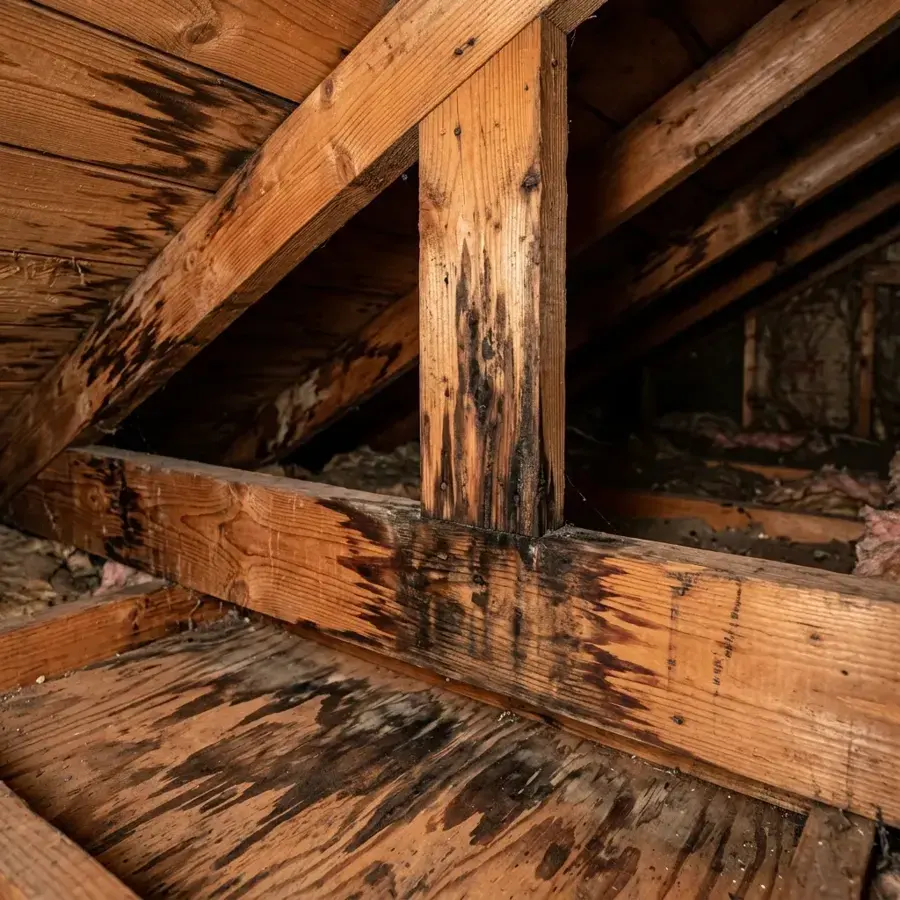
First steps for storm roof leak water damage in Clayton
- 1
Stay clear
Keep out from under a sagging or dripping ceiling.
- 2
Catch the drips
Place buckets and move furniture, rugs and electronics aside.
- 3
Photograph the stain
Capture the ceiling, any bulge and the attic if it can be reached safely.
- 4
Call a roofer and the crew
The roofer stops entry, and the crew dries what is wet.
How storm roof leak water damage work is done in Clayton
Wet winters and atmospheric rivers push water into every weak spot on a roof, and on hillside homes in Clayton wind-driven rain finds flashing, vents and worn shingles quickly. The December 31, 2022 atmospheric river, which flooded streets and swelled streams in Clayton, is the kind of storm that tests them all. Water that gets in usually shows on a ceiling long after the roof took the hit.
What does storm roof leak water damage cost in Clayton, CA?
A single ceiling area with a small attic cleanup is the first card, several rooms with ceiling removal is the second, and a long storm exposure with large insulation removal is the third.
One ceiling area
$1,500 to $4,000
- Attic readings taken
- Some insulation removed
- Ceiling dried in place
Several rooms
$4,000 to $8,500
- Ceiling drywall cut out
- Attic decking dried
- Walls checked
Long storm exposure
$8,500 to $14,000
- Large insulation removal
- Several ceilings opened
- Extended equipment time
Ranges are typical, not a quote: category of water, square footage, material class and how fast drying started move the number most. Run the water damage cost calculator for a closer range.
The storm roof leak water damage process in four steps
The tech who does the walkthrough maps moisture before any equipment goes down, so the drying plan matches what is actually wet. Equipment stays until the readings say dry, not until it looks dry.
- 1
Meter the attic
Readings follow the water back to the entry point.
- 2
Remove the wet
Soaked insulation and soft drywall come out of the house.
- 3
Dry both levels
Equipment runs in the attic and the rooms below.
- 4
Read and record
Final readings are logged for the claim file.
Tracing a roof leak
The stain on a ceiling is rarely where the roof is open, because water runs along rafters and insulation before it drips.
- Attic access is used to meter sheathing, rafters and insulation
- Moisture mapping follows the water back toward the entry point
- Thermal imaging shows wet insulation from below
- Ceiling readings decide which sections can dry in place
- Photos tie each reading to a spot in the house
Flashing around vents and chimneys, cracked tiles and lifted shingles are the usual entry points, and a roofer finds them. The crew's readings tell the roofer where the water ended up, which helps narrow the search.
What comes out and what stays
Wet insulation is removed because it keeps water against framing and ceiling drywall. A small stain with a firm ceiling is dried in place, while a bulging or soft section is cut out and replaced.
The crew works only as far as the readings require, so one stain does not turn into a rebuild. Ceiling repairs follow ceiling leak water damage practice.
Roof repair and drying
Temporary tarping or roof repair is a roofer's job, and it has to come first or the attic keeps getting wet. Drying then runs in the attic and the rooms below until framing and drywall match a dry reference. If water reached a wall, structural drying covers the cavity.
- Roofer stops the water entering
- Attic and ceiling dried together
- Walls below checked for wicking
- Final readings logged for the file
Roof leaks often return in the next storm at the same spot, so the repair record and the moisture photos are worth keeping together.
Storm roof leak water damage across Clayton and nearby towns
Roof leak calls come from all of ZIP code 94517, including the hillside streets of Oakhurst, Dana Hills and Cardinet Glen, the Town Center and homes along Clayton Road.
The same service nearby: storm roof leak water damage in Danville, Walnut Creek, Alamo.
Related water damage services in Clayton
Storm Roof Leak Water Damage questions in Clayton, CA
Why does a roof leak show up far from the hole?
Water follows rafters, insulation and the top of drywall before it drips, so the stain can sit well away from where the roof let go.
Does the attic need to be dried too?
Yes. Wet decking, rafters and insulation keep feeding the ceiling below, so the attic is metered and dried alongside the rooms.
Can a stained ceiling be saved?
If the drywall is firm and readings are low, it is dried in place. Bulging or soft sections are cut out and replaced.
Who repairs the roof?
A roofer does the repair or tarping. The crew handles water removal and drying and records the damage for the claim.
Are atmospheric rivers a roof risk in Clayton?
They can be. Long, wind-driven rain, like the storm on December 31, 2022, tests flashing, vents and shingles on hillside homes.
Will a roof leak claim need documentation?
Yes. Photos, readings and a dated record of what was removed help the carrier see how storm water moved through the house.
Still dealing with it?
A roof leak soaks insulation long before the ceiling shows it.
Storm water inside your Clayton home?
Describe the stain, the storm and any attic access, and the crew will plan metering, insulation removal and drying.
(888) 774-9605Send roof leak details