Slab Leak Water Damage in Walnut Creek
A supply pipe leaking beneath a concrete floor wets flooring from below, and it often runs unseen for a while. Crews confirm the leak is repaired, lift wet flooring, and dry the slab surface with measured readings.
(888) 774-9605Request slab leak drying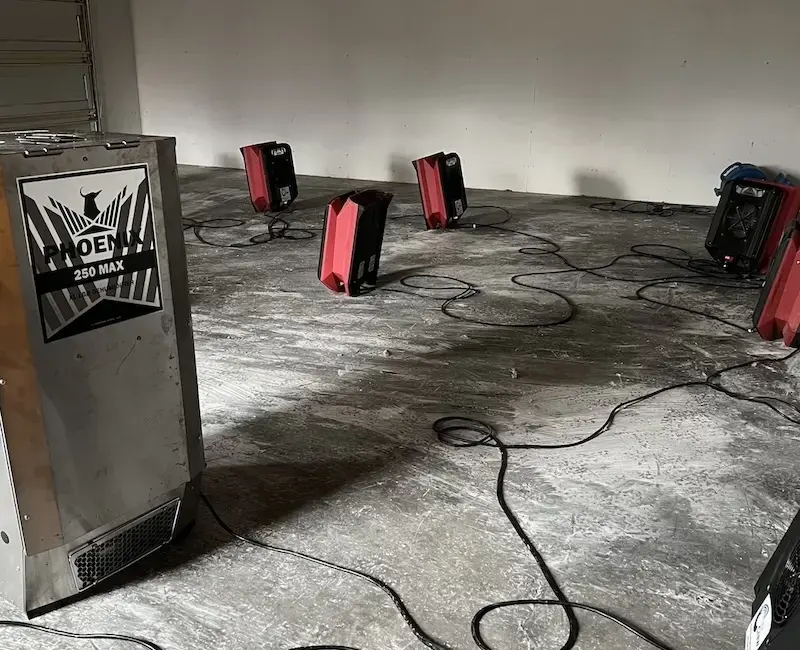
First steps for slab leak water damage in Walnut Creek
- 1
Close the main
Shut off the water supply to stop the leak from growing.
- 2
Call a plumber
A leak detection and repair visit must come before drying.
- 3
Clear the floor
Move furniture and rugs off the wet area to open the surface.
- 4
Photograph the floor
Record damp patches and lifted flooring before work starts.
How slab leak water damage work is done in Walnut Creek
A slab leak is a leak in a supply pipe that runs under a concrete floor, a quieter cousin of a burst pipe. The water spreads between the slab and the flooring above it, so the first sign is often a damp patch, a lifting plank, or a water bill that does not make sense. Not every house has a slab, and the plumber confirms where the pipe is leaking before any drying starts. After that, the restoration work is about getting the water out of flooring and concrete and tracking structural drying readings until they settle.
What does slab leak water damage cost in Walnut Creek, CA?
A small damp area costs far less than a leak that ran under several rooms, because slab drying takes longer than drywall drying. The estimate depends on room count, flooring type, and how long the water has been spreading.
Small wet area
$2,200 to $5,500
- One room of flooring
- Slab drying mats
- Readings every day
Several rooms
$5,500 to $13,000
- Flooring lifted
- Desiccant drying
- Lower drywall checked
Long-running leak
$13,000 to $24,000
- Large slab area
- Category 2 treatment
- Walls and cabinets opened
Ranges are typical, not a quote: category of water, square footage, material class and how fast drying started move the number most. Run the water damage cost calculator for a closer range.
The slab leak water damage process in four steps
The tech who does the walkthrough maps moisture before any equipment goes down, so the drying plan matches what is actually wet. Equipment stays until the readings say dry, not until it looks dry.
- 1
Confirm and repair
The plumber finds the leak and fixes the pipe before restoration begins.
- 2
Map the spread
Meters trace moisture across the slab and into nearby walls.
- 3
Lift and extract
Wet flooring comes up and any surface water is removed.
- 4
Dry and verify
Mats and desiccant units run until readings match the dry reference.
How a slab leak shows itself
Clues are usually small, and they build over days or weeks before anything is obviously wet.
- A section of floor that feels warm or damp underfoot
- Laminate or wood planks that cup, buckle, or lift
- A musty smell in one room that does not clear
- Baseboards that stain or swell near the wall bottom
- A running water sound when every fixture is off
Drying a concrete floor
Concrete is dense, so it releases water slowly, and standard air movers alone are not enough. Mats set on the slab pull moisture from below the surface, while desiccant dehumidifiers dry the air so the concrete keeps releasing instead of stalling. Hardwood and engineered planks need extra care, because boards that sit on a wet slab cup quickly and may not flatten again.
Flooring that sits on top of wet concrete usually has to be lifted. Wood, laminate, and vinyl trap moisture against the slab and can warp, so the crew removes them from the wet zone and sets them aside for the claim.
What gets checked around the leak
Water rarely stays in one spot. It moves outward under the floor and wicks into the bottom of nearby walls, cabinets, and doors, so the crew meters lower drywall and trim well beyond the visible damp area.
- Lower drywall metered along the nearest walls
- Cabinet bases and toe kicks opened where wet
- Door casings checked for swelling
- Adjacent rooms tested through the slab surface
A leak under concrete can be repaired while the slab is still wet, which is why the drying plan starts only after the plumber confirms the pipe is fixed.
Slab leak water damage across Walnut Creek and nearby towns
Slab leak calls come from ZIP codes 94595 through 94598, covering Rossmoor, Parkmead, Homestead, Northgate, Saranap, Lakewood Area, and the streets around Mt. Diablo Boulevard.
The same service nearby: slab leak water damage in Danville, Alamo, Lafayette.
Water damage restoration in Walnut Creek · every town covered
Related water damage services in Walnut Creek
Slab Leak Water Damage questions in Walnut Creek, CA
How is a slab leak found?
A plumber uses acoustic and pressure testing to locate the leak, and the restoration crew then maps the moisture it left behind.
Do I need to remove my flooring?
Usually yes in the wet zone, since wood and laminate trap moisture against the concrete. Tile sometimes stays if the grout and base are sound.
How long does a concrete slab take to dry?
Concrete dries slowly, and the time depends on how wet it is and the equipment used. Readings, not a calendar, show when it is done.
Will the repair involve breaking the concrete?
That is the plumber's decision. Some pipes are rerouted or accessed from above, and the restoration crew works around that plan.
Is a slab leak covered by insurance?
Coverage varies by policy and by how the leak is classified, so ask your own insurer. The crew documents the damage clearly.
Can mold grow under flooring after a slab leak?
Damp materials left in place can encourage growth, which is why wet flooring is removed and the area is dried promptly.
Still dealing with it?
Damp floor and a leak under the concrete in Walnut Creek? The crew can outline the drying plan.
Dry the floor once the pipe is fixed
After the plumber repairs the slab leak, the crew lifts wet flooring, runs drying mats and desiccants, and records readings until the concrete is dry.
(888) 774-9605Schedule slab drying