Crawl Space Water Damage in Clayton
When winter rain or hillside runoff collects under a raised floor, the crew pumps the water out, checks the vapor barrier, removes wet insulation and dries the joists and subfloor above.
(888) 774-9605Request crawl space help in Clayton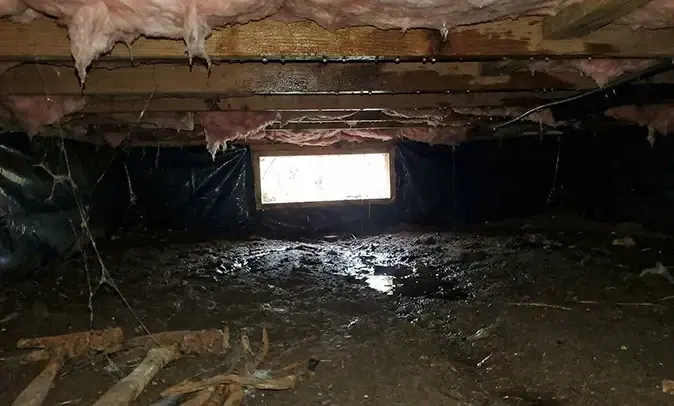
First steps for crawl space water damage in Clayton
- 1
Stay out of the space
Do not crawl in with standing water present, because wiring and slick footing add real risk.
- 2
Stop any source
If a pipe is leaking, shut the water off at the main valve.
- 3
Photograph from the access
Capture the water, insulation and barrier from the opening without entering.
- 4
Call for pump-out
Describe how long the water has sat and whether any smell is present.
How crawl space water damage work is done in Clayton
Water under a raised floor is easy to miss, because nobody looks there until a floor feels soft or a damp smell rises through the vents. Near Mount Diablo, winter rain and hillside runoff are the usual sources, and a failing pipe can add to it. The water sits against insulation, joists and soil, so the job is as much about what is wet as how much water there is.
What does crawl space water damage cost in Clayton, CA?
A small clean-water leak with a pump-out is the first card, storm runoff with silt and a replaced vapor barrier is the second, and sewage or weeks of exposure moves a job into the third.
Small clean-water leak
$1,800 to $4,000
- Water pumped out
- Wet insulation removed
- Dehumidifier drying
Storm runoff
$4,000 to $8,500
- Debris and silt cleared
- Soil treated
- Vapor barrier replaced
Sewage or long exposure
$8,500 to $14,000
- Category 3 protocol
- All insulation removed
- Extended joist drying
Ranges are typical, not a quote: category of water, square footage, material class and how fast drying started move the number most. Run the water damage cost calculator for a closer range.
The crawl space water damage process in four steps
The tech who does the walkthrough maps moisture before any equipment goes down, so the drying plan matches what is actually wet. Equipment stays until the readings say dry, not until it looks dry.
- 1
Pump and clear
Standing water and silt leave first.
- 2
Remove wet insulation
It holds water against the joists.
- 3
Treat and cover
Soil is treated and the barrier restored.
- 4
Dry and read
Joists are read until dry.
Getting the water out
A small pump clears the standing water first, followed by a wet vacuum for puddles that settle in the low corners.
- Debris and silt are cleared so the pump keeps working
- Wet insulation is pulled down because it holds water against framing
- Soil is treated with antimicrobial where water stood
- The vapor barrier is inspected for tears and replaced when needed
Hillside runoff tends to arrive after long storms, not during a single shower, so a space that was dry in autumn can fill quietly by midwinter. Checking the access cover after heavy rain catches it early.
How joists and floors dry
Dehumidifiers and air movers cannot reach into a crawl space the way they do a room, so equipment is set at the access point to move air along the space, or the floor is dried from above.
Readings at the joists, the subfloor and the soil edge show when the framing is back to normal, and the access cover stays open for readings until then.
When the source is not rain
A leaking supply pipe or drain under the house changes the plan. Clean water is dried in place, but sewage means containment and removal under a stricter protocol, covered under sewage backup cleanup. Gutter or roof water running toward the foundation is worth fixing so the problem does not return. Runoff that also entered the garage or lower floor falls under storm flood cleanup.
- Clean pipe leaks are dried in place
- Sewage follows containment and removal
- Gutters and grading get a closer look
Insulation that has been wet once rarely regains its value, and left in place it keeps joists damp, so removing it early shortens the whole job.
Crawl space water damage across Clayton and nearby towns
Crawl space calls run across ZIP code 94517, with hillside streets near Dana Hills, Dana Ridge and Oakhurst as well as the Town Center and homes along Marsh Creek Road.
The same service nearby: crawl space water damage in Danville, Walnut Creek, Alamo.
Related water damage services in Clayton
Crawl Space Water Damage questions in Clayton, CA
Why does Clayton get water under raised floors?
Winter rain and runoff from the hillside slopes near Mount Diablo are the usual sources, and a failed pipe or drain under the house can add water in any season.
Is wet crawl space insulation always removed?
Mostly yes. Wet batts hold moisture against the framing and lose their value, so they come out, while dry insulation farther along can stay.
Can the vapor barrier be reused?
If it is torn, shifted or soiled it is replaced. A sound barrier is cleaned and laid back so ground moisture stays out of the framing.
Does the crew enter the crawl space?
Yes, with protective gear and a plan for lighting and footing. Where the space is unsafe, pumping and drying are managed from the access opening.
How is sewage under the house handled?
As Category 3: containment, removal of all porous materials, antimicrobial treatment and extended drying, with the home's interior protected from the work.
What happens to the soil?
Soil that stood in water is treated with antimicrobial and left to dry while the vapor barrier goes back in, so the space does not stay damp.
Still dealing with it?
Water under a floor keeps joists wet for weeks.
Water under your Clayton floor?
Say how the water arrived and how long it has sat, and the crew will plan pump-out, insulation removal and joist drying.
(888) 774-9605Send crawl space details