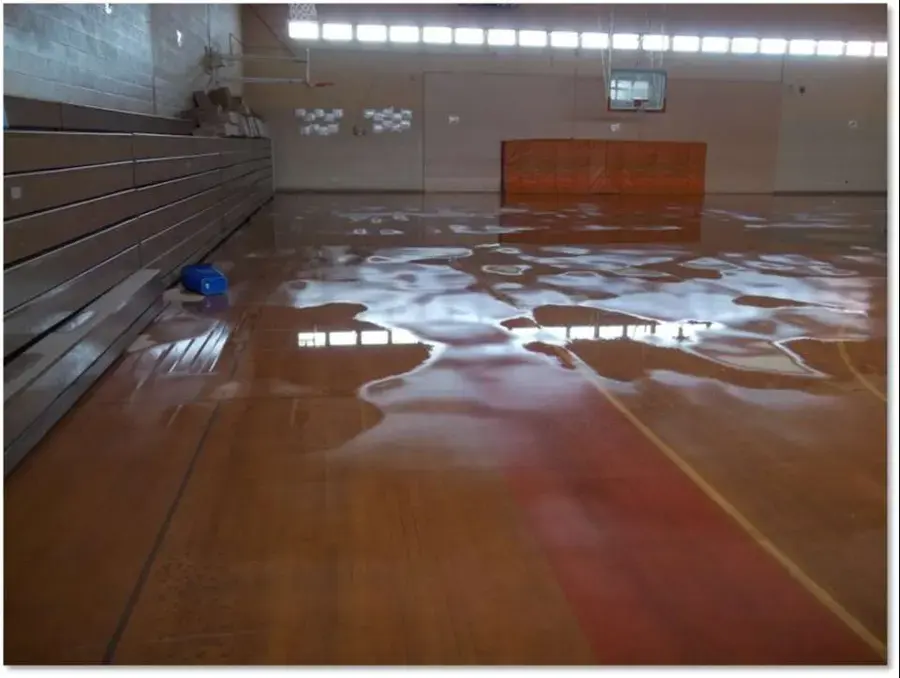
Downtown Walnut Creek has water running beneath it. The creek that gave the city its name flows through tunnels under downtown, and the business district has a long record of flooding. This post gives a shop, office or restaurant owner a day one plan for storm water or a supply failure.
Key takeaways
- Downtown flooded in April 1958, and localized flooding caused damage in 2002 and 2005, so a creek or storm drain event is a real risk.
- Supply failures matter too: in January 2026 a 16 inch steel transmission pipe from 1955 broke near Ygnacio Valley Road and Homestead Avenue and an office building lost water for at least a day.
- The first day is for safety, stopping the source, photographs and a call to the landlord and insurer.
- Storm water that entered from outside is treated as contaminated, and porous materials are removed.
- Phased drying lets part of a building keep operating while another part is cleaned and dried.
Why downtown Walnut Creek has a water history
Walnut Creek, the waterway, runs through tunnels beneath downtown. Much of downtown flooded in a major storm in April 1958, and three major floods hit downtown between 1955 and 1962.
The Army Corps of Engineers built a system of levees, drop structures and concrete channels on the creek between 1965 and 1971. Localized flooding still caused damage in 2002 and 2005.
Contra Costa County Flood Control Zone 3B covers the Walnut Creek watershed and is the largest flood control zone in the county.
Downtown also holds Broadway Plaza and Shadelands Business Park as major commercial areas, so a water event can affect restaurants, offices and retail in the same stretch of the city.
For a business owner, that history is a reason to plan before the rainy season instead of after a loss.
- Creek and storm drain water, mostly in winter.
- Water main and supply failures that can flood a basement, a stockroom or a lobby.
- Roof and sprinkler leaks that turn into water in the space below.
The first steps for a business owner
Safety comes first. Standing water near outlets, floor boxes or equipment can be live.
Stop the source and the power
Shut off the water supply to the building if a pipe has failed. Turn off power to wet areas at the panel, but only from a dry spot.
- Close the main water valve if the supply is the source.
- Shut off breakers to wet areas.
- Keep staff and customers out of standing water.
Document before anything moves
Photographs and video of the water, the damage and the inventory help with an insurance claim. A written list of what was affected and when matters later.
- Photograph walls, floors, ceilings and equipment.
- Note the time the water was found.
- Tell the landlord and the insurer.
Storm water versus clean water
The source of the water decides how it is handled. Water from a broken supply pipe starts clean, while storm water, creek water and drain overflow are treated as contaminated.
Contaminated water means porous materials such as carpet, ceiling tile and lower drywall are removed instead of dried. A storm flood cleanup in a commercial space follows that rule and also covers the floor, the base of walls and anything stored low.
Restaurants and food businesses face an added concern, since health rules may govern what can be reopened. The restoration crew documents the work for any inspection.
- Clean water from a supply pipe, if caught early.
- Gray water from appliances and overflow.
- Storm and creek water, treated as contaminated.
The January 2026 main break and a business without water
A 16 inch steel transmission pipe from 1955 broke near Ygnacio Valley Road and Homestead Avenue in January 2026. EBMUD repaired it over two days, closing lanes in both directions, and an office building nearby lost water for at least a day.
That event is a reminder that a business can be disrupted without flooding at all. A loss of water changes a plan for restrooms, kitchens and cooling systems, even when the floor stays dry.
- Know where the building main shutoff is.
- Keep a plan for an extended loss of supply.
- Check floors and ceilings once service returns for leaks that started during the outage.
Protecting inventory, records and equipment
A business loses more than floors to water. Stock, paperwork, computers and kitchen equipment can all be affected, and the order in which they are handled matters.
Moving items off the floor early limits the damage, but only when it is safe to do so.
- Lift inventory and files onto shelves or tables above the water.
- Unplug computers and equipment, and do not turn them on until a technician has checked them.
- Bag and label wet paperwork instead of discarding it, since some can be dried or copied.
- Photograph the stock before anything leaves the building.
- Keep a list of items that are discarded.
Phased drying so the business can keep running
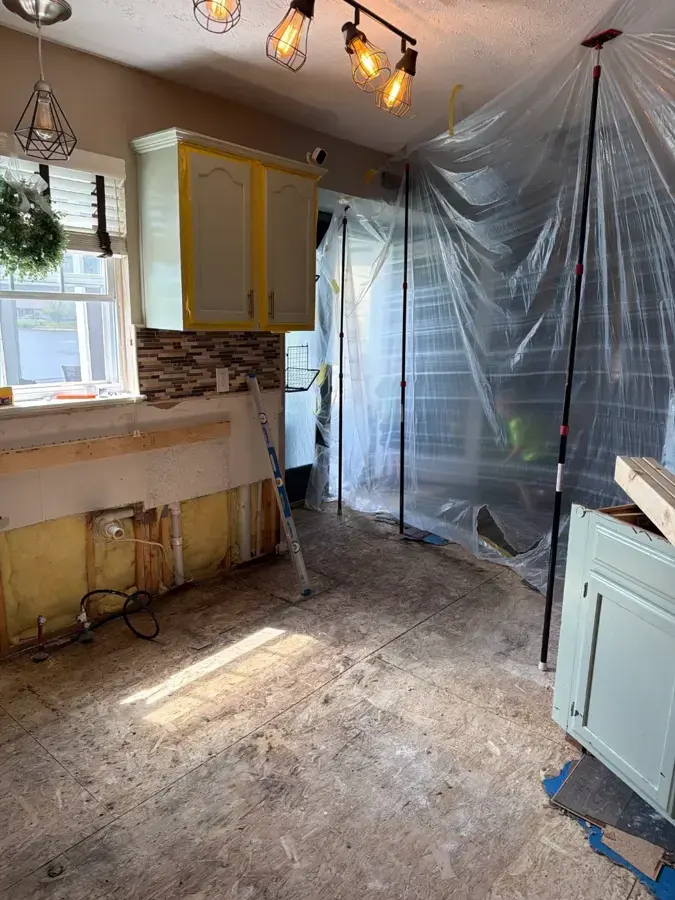
A commercial space is rarely one room. The crew sets containment, works in phases and dries one area at a time, so a business can often keep part of the space open.
Daily moisture readings track each phase. Where walls, ceilings or a slab are wet, the job moves to structural drying, with air movers and dehumidifiers matched to the space.
- Containment between wet and dry areas.
- Phased work so tenants or staff can stay in dry areas.
- Readings recorded per area for the insurance file.
- Equipment placed to avoid blocking exits.
Reopening and what a restoration crew documents
The goal of the cleanup is a space that is dry, clean and safe to reopen. The crew takes readings in each area and keeps a log of equipment and removal work.
That log helps a landlord, an insurer or an inspector understand what was done. It also gives the owner a clear picture of when each area is ready for rebuilding.
Where a space needs rebuilding after drying, the repair work is separate from the water damage work, and the two are planned in sequence.
- Moisture maps by room or zone.
- A list of materials removed and why.
- Equipment logs showing what ran and for how long.
- A closing report once all readings reach the dry standard.
Working with landlords, tenants and insurers
In a leased space the lease decides who handles building repairs and who handles contents. The first call is usually to the landlord, then to the insurer.
A written scope from a commercial water damage crew, with photos and readings, speeds the claim.
Owners who want a full picture of services can look at the Walnut Creek water damage page for the other kinds of loss handled in the city.
- Keep receipts for emergency costs.
- Ask the landlord about shared systems such as sprinklers.
- Keep a log of damaged inventory with dates.
Questions
Can a business stay open during drying?
Often part of it can. Containment and phased work keep dry areas in use while wet areas are dried.
Is creek water the same as a pipe leak?
No. Creek and storm water are treated as contaminated, so porous materials are usually removed.
Who should be called first?
Safety first, then the landlord and the insurer. The restoration crew can begin extraction and documentation in parallel.
Does a main break cause water damage?
A main break can flood a basement or lobby, but it can also leave a business without water, which is a different problem.
What areas of Walnut Creek are covered?
Downtown, Broadway Plaza and Shadelands Business Park are major commercial areas, and the same steps apply across them.
What if only the ceiling above a business is wet?
A ceiling leak is checked for its source, which may be a roof, a pipe or a unit above. The ceiling is opened where readings call for it.