When sewage comes up through a floor drain or toilet in Lafayette, the first question is who is responsible. Central San maintains the public sewer in the city, but the property owner is responsible for the entire sewer lateral, from the building to the public sewer, including the fitting at the main. This post covers the signs of a backup, how it is treated and what the cleanup removes.
Key takeaways
- Central Contra Costa Sanitary District, known as Central San, provides sewer service and maintains the public sewer in Lafayette.
- The property owner is responsible for the entire sewer lateral from the building to the public sewer, including the fitting at the main.
- Lafayette does not require a sewer lateral inspection when a property is sold, so the condition of an older lateral may not be known.
- A sewage backup is category 3 water, and porous materials it touches are removed instead of dried.
- Stop using water in the house and keep people and pets out of the affected area.
Who maintains what
The sewer system has two parts. The public sewer runs under the street and is maintained by Central San.
The lateral is the pipe from the house to that sewer. In Lafayette the owner is responsible for the entire lateral, including the fitting where it joins the main.
- Public sewer in the street: Central San.
- Lateral from the building to the public sewer: the property owner.
- Fitting at the main: part of the owner's lateral.
- No sewer lateral inspection is required at sale in Lafayette.
Signs that a sewer is backing up
A backup usually starts with small clues in the lowest fixtures of the house. Slow drains and gurgling are common first signs.
- Several drains slow at once, not just one sink.
- Gurgling in a toilet when a washer or tub drains.
- Water or sewage in a floor drain, tub or shower.
- A sewer smell inside the house.
- Toilets that bubble or rise when another fixture is used.
What to do when sewage comes up
The first steps protect health. Raw sewage can carry bacteria and other contaminants.
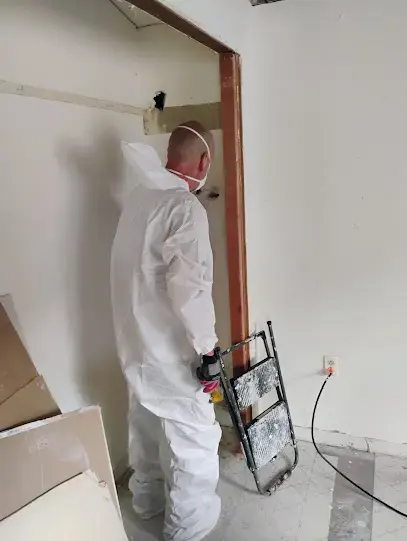
Protective gear matters for anyone who handles the area. Boots, gloves and a respirator are used in a cleanup, and a homeowner should not wade into standing sewage or touch affected items bare handed.
Once the source is stopped and the area is isolated, a restoration crew can begin removal and cleaning.
Immediate steps
Stop running water in the house, since every flush and load of laundry adds to the backup. Keep children and pets out of the area.
- Do not use toilets, sinks or the washer.
- Keep the affected room closed.
- Do not use a household vacuum on sewage.
Find out where the blockage is
A plumber can tell whether the blockage is in the lateral or the public sewer. If the problem is in the public sewer, Central San maintains it, and a utility response is separate from the cleanup inside the house.
Many Lafayette homes were built from the 1950s to the 1980s, so a lateral may be old, and with no inspection required at sale its condition may not be on record.
Why an older lateral can be a problem in Lafayette
Lafayette changed from an agricultural village into a commuter town in the middle of the last century, and many homes date from the 1950s to the 1980s. Single story ranch houses on generous lots are common.
A home on a larger lot can have a longer lateral to the street, which means more pipe for the owner to maintain. The age of the pipe is not on record unless someone has had it inspected.
Because no inspection is required at sale, a buyer may not know the lateral has ever been looked at.
- A camera inspection can show cracks, offsets and roots inside the pipe.
- Roots, grease and damaged joints are common reasons laterals block.
- A lateral that has backed up once is more likely to back up again until the cause is fixed.
Questions to ask a plumber after a backup
The plumber's findings drive repairs, and the restoration crew needs them to plan where the pipe may still be leaking into the structure.
- Where is the blockage, and is it in the lateral or the public sewer?
- Is the pipe cracked, offset or invaded by roots?
- Does the pipe need spot repair or replacement?
- Can the fitting at the main be inspected?
- Is there a record or video that can go to the insurer?
Why a sewage backup is category 3
Sewage is category 3 water. That is the most contaminated class under the drying standards used in the industry.
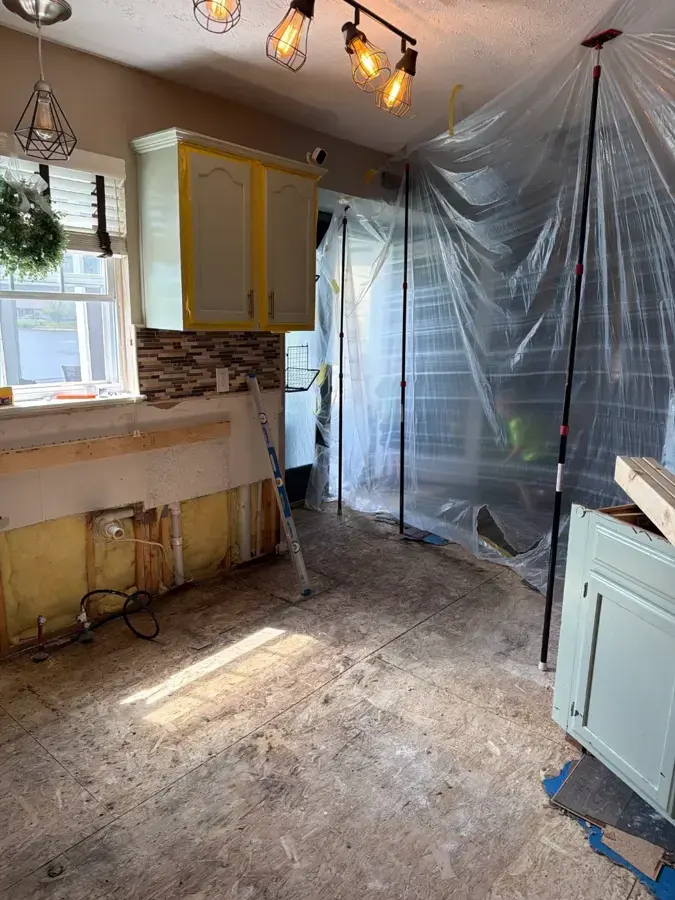
Anything porous that sewage touches is usually removed, including carpet, pad, drywall at the base of walls and some insulation.
The crew works with protective gear, containment and air scrubbing. A sewage backup cleanup follows that protocol from start to finish.
The sewage backup cleanup page for the main city describes the containment and treatment steps in more detail.
Cleanup protects the people in the house first and the building second. Nothing is rushed past the point where a surface has been cleaned and treated.
- Carpet and pad removed.
- Baseboards and lower drywall cut out where wet.
- Hard surfaces cleaned and treated with antimicrobial.
- Air scrubbing with HEPA filters to protect the rest of the house.
When the problem is a toilet overflow
Not every overflow is a sewer backup. A toilet that overflows from a clog in the fixture or the branch drain is a smaller event, though water on the floor still has to be handled.
A toilet overflow cleanup starts by sorting the water by category. Clean overflow can be dried in place, while waste water in the bowl is treated more cautiously.
If a toilet overflows more than once, the cause may be deeper in the drain, and a plumber should check before the fixture is used again.
- Clean water from a supply failure at the toilet.
- Gray water from a sink or tub overflow.
- Waste water from a blocked drain, treated as contaminated.
Drying and rebuilding after the cleanup
Once removal and cleaning are done, the structure is dried. Air movers and dehumidifiers run until readings show the framing and subfloor are dry.
Documentation matters for the insurer. Photos, readings and a record of removed materials support a claim, and the owner should check whether a policy covers sewer backups, since coverage differs.
For the full range of services in the city, the Lafayette water damage page lists each type of loss.
After drying, repairs can start. Flooring, drywall and trim are replaced only when readings show the structure is dry and the cleaned surfaces are cleared.
- Daily moisture readings.
- A written list of removed materials.
- Photos before, during and after the work.
Questions
Is the city responsible for a backup inside a house?
Central San maintains the public sewer. The owner handles the lateral from the building to that sewer.
Is there a sale inspection for a sewer lateral in Lafayette?
No. Lafayette does not require a lateral inspection when a property is sold.
Can a sewage backup be dried and left in place?
Porous materials touched by sewage are removed. Hard surfaces can be cleaned and treated.
Should the toilet still be used after a backup?
No. Wait until a plumber has cleared the blockage and the source is confirmed.
Does insurance cover a sewer backup?
Policies differ. Ask the insurer, and keep photos and readings from the cleanup.
What does a camera inspection show?
It shows the inside of the pipe, including cracks, roots and offsets, so the repair is based on what is actually there.