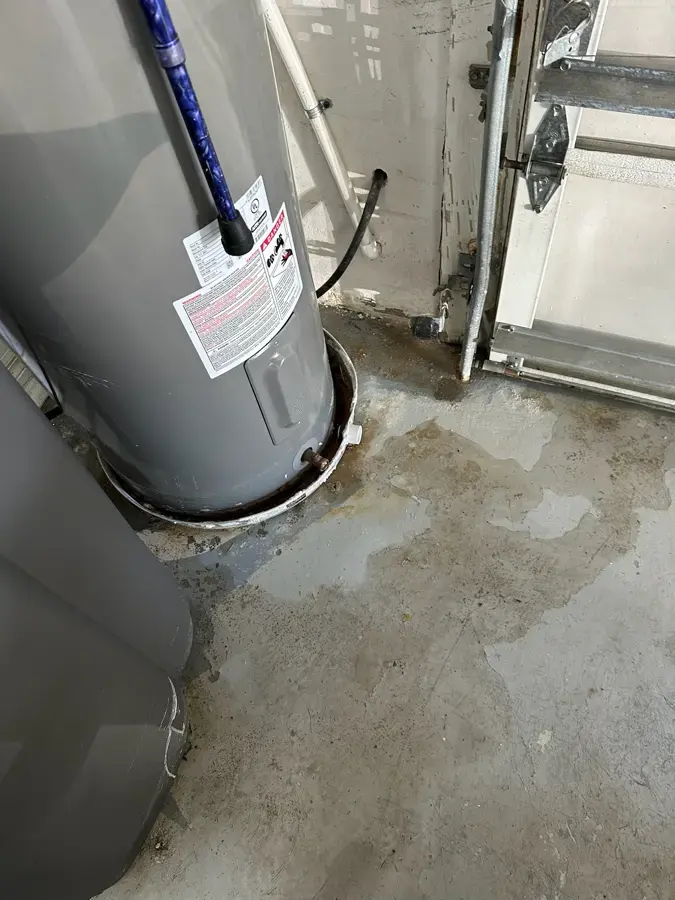
A water heater that gives out in a Danville garage can send a wide, thin sheet of water across the slab before anyone walks in. Many homes in town were built from the 1960s to the 1990s, so the tanks in those garages have reached the end of their working life. This post covers the first steps at the tank, where the water goes, and what the restoration crew removes and dries.
Key takeaways
- Turn off the power or gas to the heater and close the cold water supply valve on the tank before anything else.
- On a slab floor, water spreads sideways, so the shared wall with the house and anything stored on the floor are the first things to check.
- Extraction can start before the plumber finishes; the two jobs do not depend on each other.
- Moisture readings, not how a wall looks, decide which drywall and baseboards come out.
- Take photos of the tank, the water and the stored items before anything is moved.
Why garage water heaters fail in Danville homes
Most Danville neighborhoods were built from the 1960s to the 1990s, and garage water heaters in those homes tend to fail at the end of their life. A tank that has run for years can corrode at a seam, a fitting or the bottom of the shell.
The failure is often sudden. A tank that held a little dampness one week can release most of its contents the next.
- Rust streaks or flaking on the tank, especially near the base.
- A damp ring on the floor that comes back after it is wiped up.
- Water at the relief valve pipe or the supply fittings on top.
- Rumbling or popping while the tank heats, which can point to sediment inside.
The first steps at the tank
The goal in the first few moments is to stop new water and keep people safe. Wet floors and electrical power do not mix, so the order matters.
Stop what feeds the leak
Switch off the breaker for an electric heater or turn the gas control to off. Then close the cold water supply valve on the pipe above the tank.
If the floor around the electrical panel or an outlet is wet, stay out of the puddle and leave the breaker work to a professional.
- Power or gas off first.
- Cold supply valve closed second.
- Do not drain the tank onto the slab; let the plumber decide how it is drained.
Protect what is on the floor
Garages hold cardboard boxes, tools, holiday bins and paper goods that wick water upward in a short time. Lift them onto a dry surface and set aside anything that is already soaked.
- Photograph the tank, the source of the water and the stored items first.
- Move cars out if water is spreading toward the tires.
- Keep wet cardboard apart; it can be counted later for a claim.
Where the water goes on a slab floor
Most valley floor homes in Danville sit on a slab on grade. Concrete does not absorb much, so a tank leak spreads thin and wide instead of soaking down.
The water moves toward low spots, door thresholds and the shared wall with the house. Some garage slabs slope toward the overhead door and let much of it out, while others hold it in a shallow pool.
The bottom of the drywall, the wall plate and the insulation inside the shared wall can wick water upward. A wall can look dry on the surface while the cavity is still wet.
Water that reaches the door between the garage and the house can slip under the threshold and into a laundry room or hallway. That is one reason the house side is checked even when the garage seems to be the only wet area.
- Baseboards and the lower few inches of drywall on the shared wall.
- Door thresholds between the garage and the laundry room or hallway.
- Flooring in the room on the other side of that wall.
- Cabinets or shelves standing directly on the slab.
What extraction removes first
Standing water comes out first, using pumps and extraction units sized to the floor. Fast removal limits how far water climbs into walls and stored items.
The crew then looks at the lower wall. Wet baseboards come off, and the drywall is checked with a moisture meter at several heights.
This is the same work described on the water extraction page for the city. In a garage it is usually quick, because the slab is hard and open.
- Standing water pulled from the slab and the corners.
- Baseboards removed on the shared wall to let it breathe.
- Wet insulation pulled from the wall cavity where readings call for it.
- Soaked cardboard and porous items sorted for removal.
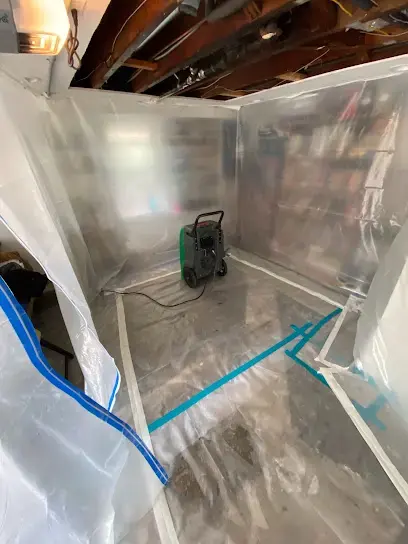
Drying the shared wall and the floor
Drying equipment is set along the wall and floor, and moisture is read again each day. Drywall is cut only where readings show water is still inside the cavity.
Heavier wetting is handled as structural drying, with the equipment left running until the wall reaches a dry standard.
The tank itself is replaced, not repaired. A plumber should confirm the new tank is installed with a drain pan and a path for water to leave the garage if the tank fails again.
- Daily readings on the wall, floor and any flooring on the house side.
- Air movers and dehumidifiers kept on the wall until it reads dry.
- Photos and readings saved for the insurance file.
Documentation that helps with the insurance claim
A tank failure is a common homeowner claim, and the insurer will ask what the water touched. Clear records answer that early.
The restoration crew adds moisture readings and a written scope, and the homeowner adds the first photographs.
- Wide photos of the garage, then close photos of the tank and the water source.
- A list of stored items that were wet, with approximate values.
- The date and the time the leak was found.
- Moisture readings from the first visit and each day after.
Mistakes that make a tank leak worse
Most of the damage from a failed tank comes from what happens after the water is found, not from the first rush. A few common habits let water spread further or hide in places that are hard to dry.
Knowing them ahead of time helps a homeowner act calmly instead of rushing.
- Mopping the slab and ignoring the wall, which leaves the cavity wet.
- Leaving cardboard boxes on the wet floor, where they wick water and keep it in the garage.
- Reaching for a wet outlet or the heater controls with water on the floor.
- Closing the garage door and leaving, which holds humidity in and slows drying.
- Waiting for the plumber before starting extraction, since water keeps moving into the wall.
When the heater is in a closet or on an upper floor
Not every Danville tank sits in the garage. Where a heater is in a hall closet or on an upper floor, the water can travel into framing and through the ceiling of the room below.
That job is closer to a water heater leak cleanup with ceiling and wall work, and the drying plan is built around what the readings show. The same first steps apply: stop the supply, protect the floor and photograph before moving anything.
Questions
Should the tank be drained before the plumber comes?
Not onto the slab. Closing the cold supply valve stops new water, and the plumber decides how to drain the tank safely.
Is the water from a heater tank clean?
It is clean when it leaves the tank, but it gathers dirt from the floor and stored items. Wet cardboard and porous materials are removed instead of being dried.
Can the wall be left to dry by itself?
Sometimes the surface dries but the cavity does not. A moisture meter on the shared wall tells whether anything needs to open.
Does a garage leak reach the house?
It can. Water moves along the slab to the door threshold and up the shared wall, so the house side is checked as part of the job.
Who handles the replacement tank?
A plumber installs the new heater. Extraction and drying are separate work and can start while the replacement is arranged.
Can stored items in a garage be saved?
Hard items such as tools and plastic bins can be wiped and dried. Cardboard, paper and fabric that sat in water are usually discarded.