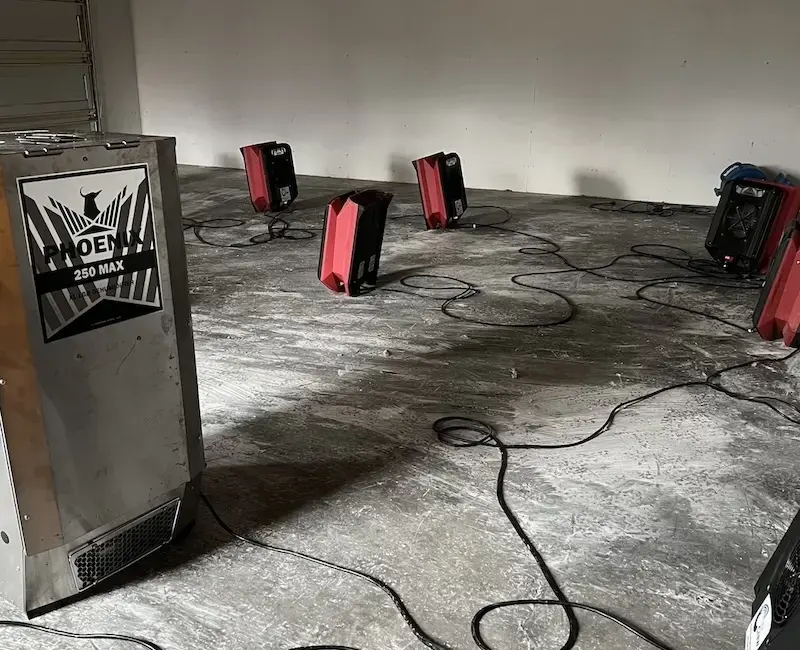
A slab leak is a leak in a water supply pipe that runs under the concrete floor, and it can run quietly for weeks. Danville has a lot of homes built from the 1960s to the 1990s on valley floor slabs, and aging copper supply pipe with pinholes and worn fittings is a common cause. This post covers the warning signs, how a leak is confirmed and how the wet slab and flooring are dried.
Key takeaways
- A warm spot on the floor, a meter that keeps moving and the sound of running water are the classic signs of a slab leak.
- Closing every fixture and watching the water meter is the simplest home test.
- Aging copper pipe, pinholes and worn fittings are the usual causes in Danville homes from the 1960s to the 1990s.
- A plumber locates and repairs the leak; the restoration crew removes wet flooring and dries the slab.
- A leak that runs a long time can turn a clean water problem into one that needs more careful treatment.
The warning signs of a slab leak
A slab leak rarely announces itself with a gush. It usually shows up as small changes in the house that are easy to explain away.
Several signs together are stronger than any one alone.
- A warm or hot patch on the floor, which can mean a leak in a hot water pipe.
- A water bill that climbs with no change in use.
- The sound of water running when every fixture is off.
- Damp carpet, lifting laminate or cupped hardwood on a section of the floor.
- A musty smell or dampness along baseboards.
How hot and cold pipe leaks differ
A leak in a hot water pipe often shows up as a warm patch on the floor and a faster rise in the water bill, because the water heater keeps running to replace the lost hot water.
A leak in a cold water pipe is quieter. It can show up as a damp spot, a musty smell or a meter that keeps moving, with no warm patch to point to it.
In both cases the plumber confirms the location before any flooring is cut.
A simple home test for a hidden leak
The easiest check uses the water meter. Turn off every faucet, appliance and ice maker in the house, then look at the meter.
What to look for
If the dial or small leak indicator keeps moving with everything off, water is going somewhere. The leak may be under the slab, in a wall or outside the house.
- Dial moving with all fixtures off points to a leak.
- A steady spin suggests a larger leak.
- No movement does not rule out a very small leak.
What to do next
Closing the main shutoff stops the loss while a plumber is arranged. The plumber can pinpoint the leak with listening equipment or a pressure test.
A burst pipe water damage call is the same kind of problem when the leak is in a wall or ceiling instead of the slab.
Why copper supply pipe fails in older Danville homes
Most Danville neighborhoods were built from the 1960s to the 1990s, and the copper supply pipe in many of them has been in service for decades. Over time copper can develop pinholes, and fittings wear at their joints.
Valley floor homes are mostly slab on grade, so a pipe that runs under the concrete cannot be seen or reached without opening the floor.
Clay soils add another factor. They swell when wet and shrink when dry, and moving ground can add stress under a slab.
- Pinholes in the pipe wall, often from age and wear.
- Worn fittings at elbows and joints.
- Hot water pipes that run under the floor to a kitchen or bath.
- Pipe movement as clay soil changes with the seasons.
What the leak does to the house over time
A slab leak keeps going day and night. Water can spread through the base of the slab, seep up through cracks and joints, and wick into whatever touches the floor.
The visible damage can start small, but the hidden damage grows. A section of flooring that looks only slightly damp may sit on a much larger wet area.
- Carpet pad that stays wet and breaks down.
- Hardwood that cups or buckles.
- Baseboards and the base of walls that wick water up.
- Cabinet bases that swell on a kitchen or bath floor.
- A rise in indoor humidity that makes the house feel muggy.
How a slab leak is repaired
The plumber chooses between a spot repair through the slab, a reroute of the pipe through the walls or ceiling, or replacement of a section. The choice depends on where the leak is and how much pipe is worn.
Repair and drying are best planned together, because the floor above the leak may have to be opened for both.
- Locate the leak with listening gear or pressure testing.
- Open the slab or reroute the pipe.
- Repair, pressure test and confirm no new leaks.
- Restore flooring after the slab is dry.
Drying a wet slab and flooring
Concrete holds water far longer than it seems to. The restoration crew lifts wet carpet, pad or flooring, since flooring over a damp slab can keep moisture trapped.
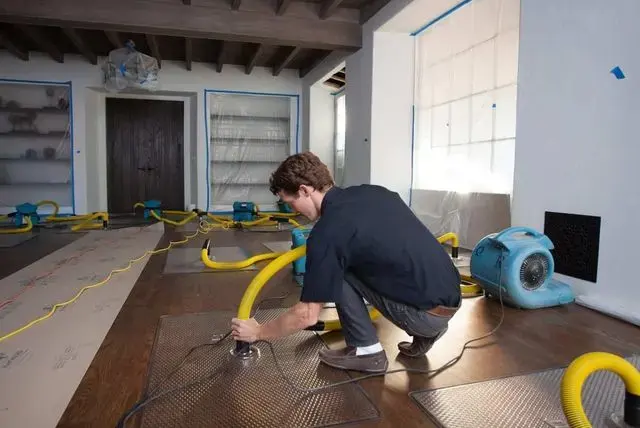
Slab drying mats, air movers and dehumidifiers pull water out of the concrete, and readings are taken each day. Heavier jobs use desiccant drying.
This is the same method described on the slab leak water damage page for the city, and it follows the drying standards used for structural work.
A slab leak repair and a dry out are not the same job, and the floor should not be rebuilt until readings confirm the slab is dry. Closing a floor over damp concrete can trap moisture under new flooring.
The restoration crew shares the readings with the plumber and the flooring installer so each trade works on a dry surface.
- Wet flooring and pad lifted so the slab can breathe.
- Drying mats and air movers set on the concrete.
- Lower drywall checked with a meter for water that wicked upward.
- Readings continue until the slab matches a dry reference.
When a long leak changes the cleanup
A leak that has run for a long time can soak baseboards, cabinets and the lower wall. Water that has sat in carpet and pad can also carry bacteria.
That changes the work from a simple dry out to a larger removal and treatment plan. Where a wide area is wet, the job moves into structural drying, with more equipment and a longer drying period.
Questions
Can a slab leak be seen from the surface?
Not always. Warm floor spots, damp flooring and a moving meter are the usual clues, and a plumber confirms the exact spot.
Does a hot water leak feel different?
It can. A hot pipe under the slab can warm a patch of the floor that stays warm even when the house is cool.
Should flooring be left in place?
Wet flooring over a damp slab traps moisture. It is usually lifted so the concrete can dry, though hardwood and some tile may sometimes be dried in place if readings allow.
Is a slab leak covered by insurance?
Policies differ. The restoration crew documents moisture readings and photos, which the insurer will ask for.
Do clay soils cause slab leaks?
Moving clay soil can add stress under a slab, but the main cause in older homes is worn copper pipe and fittings.
How long can a slab leak run before it is noticed?
Some run for weeks or longer. That is why a moving meter and a rising bill matter, since the floor may look fine.